
The Hamas War on Israel
https://youtu.be/GPg_PesVHt4?si=HJWl5fGOzU5MG4PmARI’s Onkar Ghate and Elan Journo respond to the war in Israel.
American Dream to Bureaucratic Blackhole
A painful story of how the U.S. anti-immigration system separates children from their parents who behaved legally.On the surface, Dr. Pradyuman Singh has all the makings of the immigrant American dream. He has a business recruiting students to medical schools; a wife, son and daughter who is pre-med at UC Irvine; and his family lives in a Laguna Niguel home with ocean views.But his picturesque life in the U.S. has been unraveling almost since it started. Now Singh is separated from his family and stuck 90 miles away, just across the border in Tijuana.The Singhs are just one family making their way through the labyrinthine U.S. immigration process. But their experience shows that not even higher education, wealth and investments in the U.S. may make a difference when it comes to navigating a system that for many has become a bureaucratic black hole.Singh, 55, arrived in the U.S. with his wife and daughter in 2008 on a work visa after he purchased a motel in Kansas City, Kan., where members of his extended family lived. The family landed in deportation proceedings in 2011 after his visa renewal was denied, but because of court backlogs and scheduling issues, he said, they didn’t get their day in court until this summer.[...]“The Singhs are not lawyers and they don’t have a USCIS handbook. They fell in love with this country; they solicited legal advice and lawyers including me provided them with advice; they followed that advice,” Raj said. “The Singhs never ran, never tried to do anything false, tried to adhere with every single law possible.”[...]Singh has missed three Father’s Days, Elena’s 21st birthday and his 25th wedding anniversary, which he and Shashi celebrated in June over FaceTime with Champagne. Elena hopes her father will make it back in time for her college graduation in December.Throughout the years, even before becoming separated from his family, Singh considered leaving the U.S. He could go to Russia, where he lived for 18 years and owns two apartments and an office. Or he could go back to India, where he owns more properties and recently invested in a grocery store chain.But he feels trapped. Home, for his children, is California.Read "This Indian family tried to immigrate to the U.S. legally. They ended up separated and in legal limbo" (LA Times)

Congratulations US Open Champion Novak Djokovic
Congratulations to Novak Djokovic - banned from entering the U.S. for the past 2 years by COVID-19 fascists - on winning a historic 24th grand slam title.In 2022, the Biden administration banned the best tennis player in the world, unvaccinated Novak Djokovic, from playing in the 2022 US Open, even though the CDC said he was safe. Politics, not science.Related:Yaron Brook: In Defense of Capitalism
Progressives attack capitalism because it lets some become very rich while others stay poor. Sen. Bernie Sanders and Rep. Alexandria Ocasio-Cortez call such a system “immoral.” But Yaron Brook, chairman of the Ayn Rand Institute says the opposite is true. He points out that the poor were much poorer before capitalism: “We have basically made about $2 a day for 100,000 years. In other words ... we could eat what we farmed and that was it,” Brook tells me. “And then something amazing happened about 250 years ago.” Around that time, a few countries tried capitalism. For the first time, people were allowed to profit from private property. That changed everything. Brook explains:“250 years ago we suddenly discovered the value of individual freedom. We suddenly discovered the value of leaving individuals free to think, to innovate, to produce without asking for permission, without getting the state to sign off on it and we call that the industrial revolution. We got much, much, much richer and it's hard to imagine how much richer we got ... electricity, running water, the things we all take for granted today, but we didn't have 150 years ago ... and yes, some people complain about inequality, but everybody got richer. Even the poor got richer.”https://www.youtube.com/watch?v=58frp8Lb6Xc

Guns and Free Will
Steven Pinker observes on Twitter that "The US is not a typical affluent western democracy - we do worse in most measures of human flourishing. Guns, cars, drugs are major causes."The US is not a typical affluent western democracy - we do worse in most measures of human flourishing. Guns, cars, drugs are major causes. https://t.co/M6GKqCUUOx
— Steven Pinker (@sapinker) August 1, 2023
The philosopher in me begs to differ
Guns, cars, drugs are not causes, as they are inanimate entities that lack free-will: the choice to think.
A gun used to stop a rapist;
A car driven to a grocery store;
A drug used to fight infection;
- all promote human flourishing.
It is the actions of human beings, with their defining characteristic of free-will, that are the causes, for good or bad. - Mark Da Cunha
Dershowitz: Trump Indictment Looks Like a Weaponisation of the Criminal Justice System for Partisan Advantage
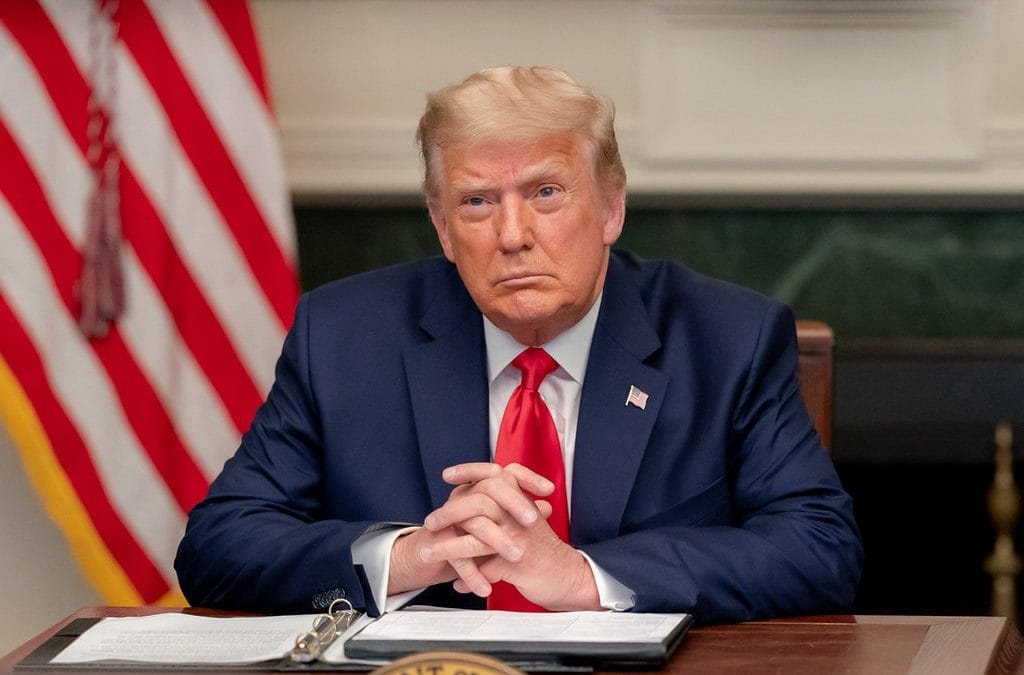
Liberal law professor and Democrat, Alan Dershowitz, writing on the latest Trump Indictment, notes that: "The indictment against Mr. Trump for possession of classified material meets the highest evidentiary standard, but it does not meet the standard for a crime that is sufficiently serious to warrant prosecution in the midst of a presidential campaign,":As I have said for years now, when the leading candidate against the incumbent president is prosecuted, especially at the urging of the incumbent president, the case against him must be bulletproof, airtight and beyond any reasonable doubt. To paraphrase Mr. Biden, the prosecutor in such a case should act more “like a ponderous judge” and less like a zealous prosecutor. He should lean over backwards to assure not only that justice is being done, but also that it is seen to be done by all reasonable people.The only alleged crime that meets this high bar is the indictment in Florida based on the videotape of Mr. Trump waving classified material in front of journalists and admitting that he had not declassified them and that they are still secret. This piece of evidence is indeed a smoking gun, but the crime itself is not nearly as serious as the ones charged in the January 6 indictment. The remaining indictments — the one at New York City and the current one in DC — are highly questionable and certainly subject to criticism by reasonable and objective people.The essence of a Banana Republic — the description applies equally to some Eastern European and Asian authoritarian regimes, as it does to South American — is the criminal prosecution of political opponents by incumbent leaders. We are not a Banana Republic and we are not close to becoming one. Yet this most recent indictment, following Mr. Biden’s public demand for the prosecution of his political opponent, brings us one step closer to banana land.I have no doubt that if the shoe were on the other foot Mr. Trump would be demanding prosecution of his political opponents, but two constitutional wrongs do not make a constitutional right. It is true that the law must apply equally to all, but it is equally true – and it has always been the case – that the law should take into account the realities of our democratic electoral system. Thus the standard for an incumbent administration prosecuting its political enemies, and especially the strongest opposition candidate, must be considerably higher than in the ordinary case because Democracy itself is at stake.In describing the standards that must be employed in such highly political cases, I have articulated two criteria – the first is the “Nixon standard.” When President Nixon was threatened with impeachment, prosecution, or both for his obvious crimes, members of his own party joined in the call for his resignation. I am confident that if Mr. Trump had been caught on tape offering or accepting a personal bribe, many Republicans would join the demand for his prosecution. But the current indictments, and especially the most recent one, do not come close to meeting the daunting Nixon standard.The indictment against Mr. Trump for possession of classified material meets the highest evidentiary standard, but it does not meet the standard for a crime that is sufficiently serious to warrant prosecution in the midst of a presidential campaign. Perhaps the superseding indictment alleging that Mr. Trump ordered the destruction of videotapes may meet that standard, but the evidence cited in the indictment seems questionable and based largely on hearsay statements.This brings us to the January 6 indictment. Here the crime is very serious, but the evidence seems lacking. I am aware of no direct eye- or ear-witness testimony that would prove beyond the reasonable doubt that Mr. Trump himself knew and believed that the election was fair and that he had lost. Indeed the evidence of which I am aware strongly suggests that Mr. Trump had convinced himself — quite wrongly in my view — that it had been stolen from him. If this is the case then any prosecution under this indictment would fail to meet the Nixon standard.The other standard that must be met is what I have called the “What Aboutism” question. It is entirely fair to ask: “what about Hillary Clinton? What about Joe Biden? What about Mike Pence? They too possessed classified material after they left office.” There are of course considerable differences among these cases, especially with regard to cooperation. But failure to cooperate is not a crime; it is a right under the Fifth and Sixth Amendments.No incumbent administration should ever prosecute a leading candidate against its president unless there is a widespread consensus among reasonable Americans of all parties and backgrounds that the prosecution is beyond legitimate controversy. None of the current indictments, in my view, meet that daunting standard. [Biden, Prosecuting His Rival, Fails To Meet the ‘Nixon Standard’ in Trump Indictments]
And in an earlier article on the January 6th indictment and its implications in regards to freedom of speech:
The bottom line of the recent Trump indictment alleges that he knew or should have known that he lost the election fair and square, and that his actions in challenging the result were therefore corrupt and unlawful. The problem with the indictment is that the Supreme Court has repeatedly held under the First Amendment that there’s no such thing as a false opinion. Every American, and especially politicians, have the right to be wrong about their opinions. They also have the right to express their false opinions, at least as long as they honestly believe they are true. Imagine what the world would look like if every politician who told a fib in order to get elected were to be prosecuted and imprisoned. Our legislative sessions would have to be held in the Allenwood prison rather than in the halls of Congress. Lying has long been endemic in politics. That’s why we honour George Washington and Abraham Lincoln as truth-tellers among the array of politicians who don’t meet that standard. Indeed, this indictment itself fails to meet the standard of honesty that it requires of Donald Trump. In describing his speech of December 6, this is what it says: “Finally, after exhorting that ‘we fight. We fight like hell. And if you don’t fight like hell, you’re not going to have a country anymore,’ the defendant directed the people in front of him to head to the Capitol, suggested he was going with them, and told them to give members of Congress ‘the kind of pride and boldness that they need to take back our country’.” Yet the indictment omits two key words from that speech – “peacefully” and “patriotically” – which suggest that the speech itself was protected advocacy under the First Amendment rather than unlawful incitement. A lie by omission is as serious as a lie by commission, especially in the context of a legal document such as an indictment....All in all, this indictment does not seem to serve the interests of non-partisan justice. It appears to be yet another manifestation of the hen an attorney general authorises the prosecution of his president’s main political opponent in an upcoming election, the case must be so strong that it leaves no doubt as to its non-partisan credibility. It should meet what I call the “Nixon standard”. The case against Richard Nixon was so strong that members of his own party and independents supported his impeachment and possible prosecution. That standard does not seem to have been met in this case. [The Trump indictment fails the Nixon test]
Grown in Argentina, Packed in Thailand
Capitalism is the social system that enables our survival and human flourishing.One complaint by ivory-tower anti-globalists is why are Argentinian pears, packaged in Thailand, for export to the U.S.? As for why it's cheaper to package Argentinian pears in Thailand for world consumption watch this video:The Immorality of the U.S.’s Imigration System
Watching this moving talk by Agustina Vegara Cid on the U.S.'s anti-capitalist, anti-rights, anti-American — in the moral/philosophical sense of the term — immigration system.For fans of Ayn Rand's novels, Agustina's imaginative alternate-reality use of Kira from "We The Living" escaping the Soviet in the modern day 21st century is a "truck-like" metaphorical device to illustrate the injustice faced by those immigrants who are American in spirit.Just Stop Oil Means Just Stop Life
Making the round on Twitter is a video of Just Stop Oil goons preventing a woman from taking her baby to the hospital. Such actions are to benefit the "environment" of which apparently human beings are not a part of.Far from "peaceful" physically blocking a vehicle with your body on a public road is not peaceful. It's an indirect initiation of physical force, that accomplishes the same objective as if they physically held the driver down at gunpoint, albeit through the "fraud" of being "peaceful." - Mark Da CunhaJust Stop Oil prevent a woman from taking her baby to the hospital.
— Censored Men (@CensoredMen) July 21, 2023
Absolutely disgraceful. pic.twitter.com/8cQ8mZT0m5
Equality of the Sexes and Tennis Player Salaries
According the Washington Post:"The difference in prize money awarded to men and women at tournaments where it has not been equalized has been stark. At last year’s Italian Open, for example, Novak Djokovic took home more than $900,000 for winning the men’s draw, while Iga Swiatek earned only about $365,000 for her women’s title. Borna Coric won $970,020 for his men’s singles victory at the 2022 Western & Southern Open in Ohio, while Caroline Garcia earned $412,000 for winning the women’s singles competition."The differences in tennis player salaries between WTA and ATP Tour Tennis players are not about women's equality, but about who sells more tickets.If sexism does not dictate ticket prices what does?Economics dictates ticket prices and player winnings. Ticket sales show that men and women would rather watch the pro men's matches (though there are times I have found personally that some of the women's matchups are better). In the case of Serena Williams she probably should get more than the men as she is the draw, especially in the U.S., as she attracts tennis fans for her amazing tennis ability, she attracts black non-tennis American fans who follow her because of her race, and she attracts American fans for her celebrity. Like her or hate her Serena Williams, like Nick Kyrios or John McEnroe, is exciting to watch:
"In 2015, the U.S. Open women's event between Serena and Venus Williams, sold out before the men's event. The 2013 and 2014, women's U.S. Open final garnered higher U.S. TV ratings than the men's final. In 2005, the Wimbledon final between Venus Williams and Lindsay Davenport drew 1 million more viewers than the showdown between Roger Federer and Andy Roddick."Yet, when I went to watch the Canadian Open a few years back in Toronto I asked why the stadium was so small as some of the top seating was gone, and my friend told me that they don't sell enough tickets for the women's event, they put it back up for the men's event— and it was Serena Williams playing Canadian #1 women's player and past U.S. Open tennis champ A. Bandreescu. It also depends on the sponsor: sponsors of the Mubadala Citi DC Open can opt to pay women more then men. They chose not to. (Note in the recent DC event that the men’s field was 48 players; the women’s 28.)Why is men's tennis on average more popular? Physically, there are male juniors tennis players who would trounce the woman #1, which is not a knock on women as they can do something much more important than play tennis: give birth to human life. If tennis events were open for everyone regardless of sex there would be no pro women's tennis; that's the nature of the game, and is why as the great Martina Navratilova would agree, "trans women" (biological males who label themselves as women) should not be in women's sports.What about the Grand Slam tennis events which pay equal prize money to the men and women? In the case of tennis Grand Slam events, it's not the players as much as the event itself that brings in fans. (On an equality setting one can argue that men should be paid more for playing best of five sets, as women play best of three.) Outside the slams, the players tend to be a draw and male players such as Rafael Nadal, Carlos Alcaraz, Npval Djokovic, Roger Federer, Nick Kyrgios draw in more fans, so they deserve more money. I think this is why a lot of the smaller events with lessor name recognition even pay appearance fees, it means the difference between making a profit and bankrupt.The WTA is taking steps to equalize pay over time, but this cannot happen immediately until the economics support it:
"One of the main pillars of the strategy includes creating a pathway toward equal prize money, a goal envisioned 50 years ago when Billie Jean King founded the WTA. This increase will happen over time, to ensure the changes are sustainable for players and tournaments in the long term, with WTA 1000 and 500 combined events attaining equal prize money by 2027 and single-week WTA 1000 and 500 events by 2033" [emphasis added]Notes former world #1 Tennis "GOAT" Novak Djokovic,
"Obviously it's a very delicate situation...Women deserve respect and admiration for what they are doing. You know, equal prize money was the main subject of the tennis world in the last seven, eight years. I have been through that process as well so I understand how much power and energy WTA and all the advocates for equal prize money have invested in order to reach that. I applaud them for that, I honestly do. They fought for what they deserve and they got it. On the other hand I think that our men's tennis world, ATP world, should fight for more because the stats are showing that we have much more spectators on the men's tennis matches. I think that's one of the reasons why maybe we should get awarded more. Women should fight for what they think they deserve and we should fight for what we think we deserve. As long as it's like that and there is data and stats available upon who attracts more attention, spectators, who sells more tickets and stuff like that, in relation to that it has to be fairly distributed."- Mark Da Cunha
Yaron Brook: Competing Visions — Natcons vs Freecons
https://www.youtube.com/live/p0jMZF3Jqc0?feature=share&t=351 For further reading: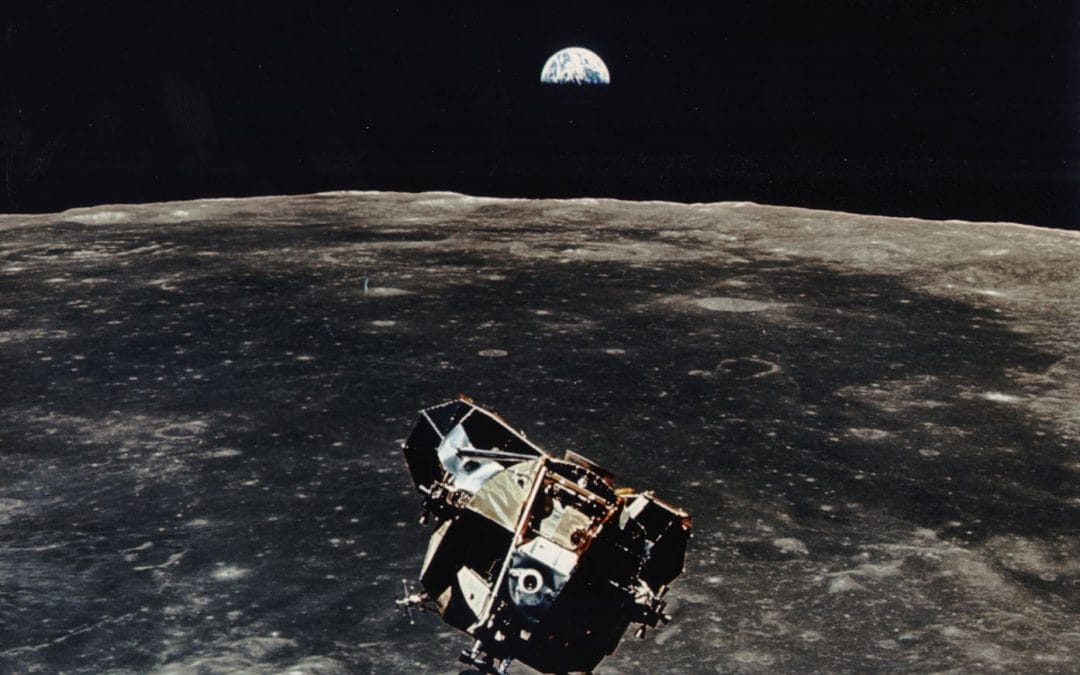
Apollo 11: What Philosophy Has To Say About a Man Walking on the Moon
July 20, 1969, marks the day Apollo 11 landed on the moon. The importance of the event is best described by philosopher Ayn Rand who writes:The most inspiring aspect of Apollo 11’s flight was that it made such abstractions as rationality, knowledge, science perceivable in direct, immediate experience. That it involved a landing on another celestial body was like a dramatist’s emphasis on the dimensions of reason’s power: it is not of enormous importance to most people that man lands on the moon, but that man can do it, is.You can read Ayn Rand's full essay, Apollo 11.
Alex Epstein: The Moral Case for Fossil Fuels, Renewable Energy, and Green Deceptions
Alex Epstein explains how fossil fuels make the world better, and how banning them ruins lives https://www.youtube.com/watch?v=R00TO3D3f5AYeonmi Park Interview by Elan Journo
Ayn Rand Institute's Elan Journo's interview with Yeonmi Park at closing banquet for OCON 2023. Journo needs his own TV show, and everyone needs to her book While Time Remains: A North Korean Defector’s Search for Freedom in America. https://www.youtube.com/watch?v=qTEfjt5ylzsVergara Cid & Ghate: The Debate Over the Right to Immigrate
Onkar Ghate and Agustina Vergara Cid discuss the immigration debate from a philosophical perspective. They address questions such as whether foreigners have a right to immigrate to America, whether immigration or its curtailment violates the rights of American citizens, and what role government has in relation to immigration.Topics covered:- Whether immigrants have a right to move to America;
- The argument that immigration violates American citizens’ rights;
- What is motivating the objection that immigrants allegedly take jobs from Americans or lower their standard of living;
- What is the proper role of government in relation to immigration policy;
- Whether failure to enforce immigration laws undermines the rule of law;
- Illegal immigration as a response to unjust laws;
- Why immigrants seeking a better life shouldn’t be smeared as “illegals”;
- Why the objection that immigration is destroying American culture is invalid;
- Ideological screening as a major threat to intellectual freedom;
- Ayn Rand’s views on immigration as flowing from her view of self-interest;
- What immigration would look like in a free society.
The Dishonest Debate on Immigration and National Security
Agustina Vergara Cid and Onkar Ghate of the Ayn Rand Institute analyze the impact of immigrants on national security and evaluate the argument that America’s national security requires strict limits on immigration.Topics covered:- How the argument that immigration is a threat to national security is biased against immigrants;
- Why limiting immigration to prevent terrorism is dishonest;
- How immigrants make us safer by serving in the military;
- How restrictions on immigration have contributed to a shortage of skilled workers in areas of the economy the military depends on;
- Why we need a targeted response to actual national security threats, not blanket prohibitions on immigration;
- How those who oppose immigration, like environmentalists arguing against fossil fuels, selectively look for evidence to support their ideology;
- Why mainstream thinkers fail to consider the benefits of immigration to national security.
