Jan 16, 2022 | Politics, World
The number one tennis player in the world, and reigning Australian Open champion, Novak Djokovic, was deported for the 'thought-crime' of being a symbol of those who opposed dystopian vaccine mandates.According to the WSJ:"Australia’s decision to cancel tennis star Novak Djokovic’s visa for a second time was driven by fear that letting him stay could foster antivaccine sentiment during a surge in Covid-19 cases, court documents show. Immigration minister Alex Hawke didn’t dispute Djokovic’s claim of a medical exemption from rules that travelers to Australia must be vaccinated against Covid-19, according to documents made public Saturday. Hawke, who canceled Djokovic’s visa on Friday, said allowing the player to stay could sway some Australians against getting vaccinated."[...] "Djokovic’s lawyer Nick Wood argued in a late-night court hearing on Friday that Hawke’s reasoning was flawed because he hadn’t considered that Djokovic’s deportation could have an impact on antivaccine sentiment."[...] "Hawke didn’t refute Djokovic’s contention that he posed a negligible health risk, documents showed. Djokovic has said his Covid-19 infection in December confers similar protection to a vaccine, the documents said." [Australia Feared Letting Novak Djokovic Stay Would Fuel Antivaccine Sentiment, Stuart Condie, 15 Jan 2022"]
It is instructive to note that Djokovic was not finally deported for an invalid medical exemption (the Australian federal government ended up not questioning that validity in the final hearing), nor that he was a physical threat to others (as he tested negative for COVID), nor that he was unvaccinated (as he has "natural immunity" from previous COVID infections which exempts him from the vaccination).Djokovic was deported because he may be seen as a symbol for "anti-vaccination sentiment" by the Federal government, according to Mr. Hawke, and that under section 133C(3) of the Migration Act he has the legal power to cancel the visa held by Djokovic “on health and good order grounds, on the basis that it was in the public interest to do so.”Comments Mr. Hawke:“Mr Djokovic is such a person of influence and status. Having regard to the matters set out above regarding Mr Djokovic’s conduct after receiving a positive COVID-19 result, his publicly stated views, as well as his unvaccinated status, I consider that his ongoing presence in Australia may encourage other people to disregard or act inconsistently with public health advice and polices in Australia."“In addition, I consider that Mr Djokovic’s ongoing presence in Australia may lead to an increase in anti-vaccination sentiment generated in the Australian community, potentially leading to an increase in civil unrest of the kind previously experienced in Australia with rallies and protests which may themselves be a source of community transmission.”“These matters go to the very preservation of life and health of many members of the general community and further are crucial to the maintaining the health system in Australia, which is facing increasing strain in the current circumstances of the pandemic.”
(Note that in Australia's population of those age 16 and over, more than 90 percent have been double vaccinated.)***
This brings to my mind these wise words by Rav Arora:"Honesty, nuance, and compassion are especially needed when it comes to personal health choices. We are only born with one body and we must make medically informed decisions at our own volition without governmental coercion or political pressure."
Apparently not in the fascist state of Australia.
***
Avi Yemini has an excellent breakdown of the context surrounding his unjust deportation: Related: Novak Djokovic: Global Standard Bearer for Body Autonomy

Dec 5, 2021 | Ayn Rand & Objectivism
Ayn Rand scholar and professor of literature, Shoshana Milgram, writes on "‘Capitalism’: When and How Ayn Rand Embraced the Term (Pt. 1)" (2021 Dec 1, New Ideal):Capitalism, wrote Ayn Rand, is “the only system geared to the life of a rational being.” She was an outspoken, enthusiastic, uncompromising advocate of capitalism, a self-described “radical for capitalism.” Her 1957 best seller, the novel Atlas Shrugged, celebrates production and business. She is known for eloquent articles on the topic (e.g., “America’s Persecuted Minority: Big Business”), many of them collected in the 1966 volume Capitalism: The Unknown Ideal.But at what age did she first come to view business itself positively? When did she recognize free enterprise as not only an efficient economic system, but as the only moral political system? When did she begin to make salient use of the term “capitalism” and think of it as naming her political ideal? The present article is a biographical answer. I begin with her youth, continue through her university education and her early Russian publications, cross the Atlantic with her to the United States, follow her reading and writing about individualism in politics, and examine the advocacy in her private and public writing of the principles of free enterprise — and the appearance there of the word “capitalism.”
Read the rest.
Nov 18, 2021 | Politics
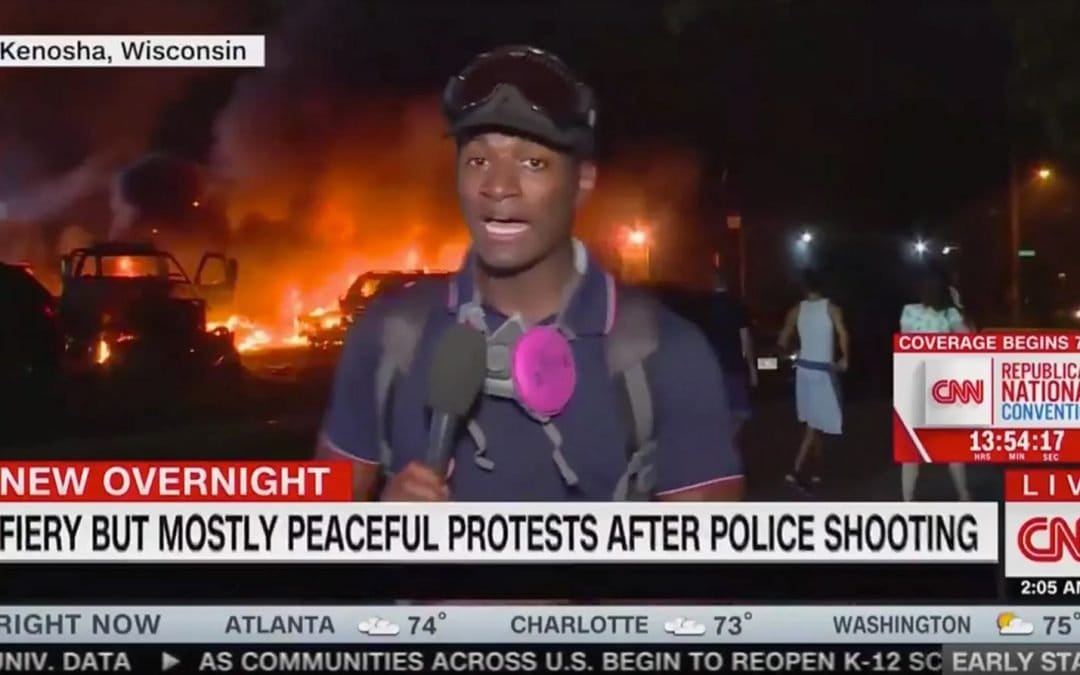
Bari Weiss dismisses the lies by the Democrats and their press in The Media's Verdict on Kyle Rittenhouse:
Writes Weiss:
- There was zero evidence that Rittenhouse was connected to white supremacist groups at the time of the shooting.
- In addition to having a job in Kenosha, Rittenhouse testified that much of his family lived there: his father, his grandma, his aunt and uncle, and his cousins.
- Kyle Rittenhouse did not travel to Kenosha to oppose protesters. He testified under oath that he had traveled to Kenosha for his job the night before the shootings, and was staying at a friend’s house.
- Rittenhouse didn’t bring the gun to Kenosha. The gun was purchased for Rittenhouse months earlier by a friend and stored in Kenosha at the home of that friend’s stepfather, as then-17-year-old Rittenhouse was too young to purchase it. Under Wisconsin law, 17-year-olds are prohibited from carrying rifles only if they are short-barreled. The weapon Rittenhouse was carrying was not short-barreled. Which is why, during closing arguments, the court threw out the charge.
- [T]here’s no clear indication that Rittenhouse sought to kill anyone. What we know is that he showed up with a first aid kit and an AR-15-style rifle. Video evidence, and Rittenhouse’s own testimony, indicates that he offered medical assistance to protestors and ran with a fire extinguisher to try to put out fires—and that later, after being pursued, he killed two people, Joseph Rosenbaum and Anthony Huber, and severely wounded a third. Both video evidence and the only living person that Rittenhouse shot that night, Gaige Grosskreutz, undermined the idea that Rittenhouse was simply an aggressor looking for a fight. During cross examination Grosskreutz acknowledged that Rittenhouse shot him only after Grosskreutz had pointed his own gun at Rittenhouse.
Read the rest.Nov 17, 2021 | Philosophy
Princeton University professor Allen C. Guelzo, comments on the foundations of CRT in an AEI podcast: as a "reaction against the Enlightenment and against the confidence that scientific reason could discover the answers to things":....Kant was appalled at the irreligious conclusions to which reason had driven the Enlightenment. He was determined to find a way around Enlightenment religious lack of faith. So he says, what can we know for certain? Well, if we rely strictly on reason, we discover that reason only works on what our physical senses tell us, and that's not much. Reason can't penetrate into the essence of things. Some other tool was needed to reach what he called the thing in itself. So, to brush back the influence of reason, Kant develops a critique of reason, a critical theory, if you will.....when you see how little reason can penetrate to the real lessons of things and you awake to a new reality. And that reality is that reason has blinded you. That is critical theory...... critical theory set off a chain reaction of romantic investigations for non-rational explanations of reality.....some of those non-rational explanations took a form of nationalism. That's what you find in the philosophy of Georg Hegel. Some of them took the form of out-and-out racism. ... Above all, you find non-rational explanations of reality based on economic class, and that is Karl Marx....And you might think that economics functions as what Adam Smith called a natural instinct to truck and barter. But in reality, it's governed by the oppressive relations of class. Especially in the hands of Marx, critical theory uncovers the activity, not of employers and employees, but of an oppressor class and an oppressed class.
And the payoff?...it promises an emotional burst of revelation and indignation. It allows you not so much to understand because remember, understanding is a function of reason, it allows you to denounce. It allows you to replace the question, is what I know true with a different question, whose interests does this question serve?.... If the only purpose of questions is to serve the interests of a dominant or oppressive class, then no question that you ask about the truth of a situation or the truth of an event or the truth of a proposition, none of that kind of questioning about truth has any meaning. And any answer you come up with, which doesn't speak in terms of some hidden structure of oppression, can simply be dismissed as part of the structure of oppression.
Read the rest.Marc A. Thiessen writes in the Washington Post on "The danger of critical race theory":
Richard Delgado and Jean Stefancic, authors of “Critical Race Theory: An Introduction,” state that “critical race theory questions the very foundations of the liberal order, including equality theory, legal reasoning, Enlightenment rationalism, and neutral principles of constitutional law.”
....Ibram X. Kendi, one of CRT’s leading advocates, openly declares: “The only remedy to racist discrimination is antiracist discrimination. The only remedy to past discrimination is present discrimination. The only remedy to present discrimination is future discrimination.”
This is the opposite of what the civil rights movement stood for. The Rev. Martin Luther King Jr. did not argue that America was systemically racist; he argued that racism was un-American.
By dispensing with the reason the only solution is violence:
"… If your critical race theory is impervious to questioning and evidence, then fine: I will retreat into my critical race theory and it too will be impervious to evidence and the questioning. At which point then the only solution becomes violence.”
Nov 9, 2021 | Sci-Tech
From "Here’s Why Rapid COVID Tests Are So Expensive and Hard to Find", ProPublica:
....Companies trying to get the Food and Drug Administration’s approval for rapid COVID-19 tests describe an arbitrary, opaque process that meanders on, sometimes long after their products have been approved in other countries that prioritize accessibility and affordability over perfect accuracy.
On the FDA treating private bio-tech companies like criminals:
After the FDA put out a call for more rapid tests in the summer of 2020, Los Angeles-based biotech company WHPM, Inc. began working on one. They did a peer-reviewed trial following the agency’s directions, then submitted the results this past March. In late May, WHPM head of international sales Chris Patterson said, the company got a confusing email from its FDA reviewer asking for information that had in fact already been provided. WHPM responded within two days. Months passed. In September, after a bit more back and forth, the FDA wrote to say it had identified other deficiencies, and wouldn’t review the rest of the application. Even if WHPM fixed the issues, the application would be “deprioritized,” or moved to the back of the line. “We spent our own million dollars developing this thing, at their encouragement, and then they just treat you like a criminal,” said Patterson. Meanwhile, the WHPM rapid test has been approved in Mexico and the European Union, where the company has received large orders.
An FDA scientist who vetted COVID-19 test applications told ProPublica he became so frustrated by delays that he quit the agency earlier this year. “They’re neither denying the bad ones or approving the good ones,” he said, asking to remain anonymous because his current work requires dealing with the agency.
On FDA micro-managing how the tests can be used making them expensive, and banning the private sale of cheap tests to the public:
FDA officials were particularly concerned about allowing tests to be administered outside the purview of a trained health care provider. “To mitigate the impact of false results, all Covid-19 tests authorized to date have been made available only by prescription, so that clinicians can interpret results for patients,” wrote Shuren and his deputy Dr. Tim Stenzel in an October 2020 column in The New England Journal of Medicine.
That cautious approach persisted all through the winter and early spring, despite rising agitation from the White House and Congress around the availability of tests.
“I actually have been saying that for months and months and months, we should be literally flooding the system with easily accessible, cheap, not needing a prescription, point of care, highly sensitive and highly specific” tests, White House chief medical advisor Dr. Anthony Fauci said under questioning from Schrier in a hearing on March 17.
On the FDA standing in the way of innovation and experimentation:
The FDA has been particularly circumspect with more novel approaches to testing, such as an olfactory test that detects the common COVID-19 symptom of loss of smell. The agency’s reviewers deprioritized an application for the scratch-and-sniff card even though it had been proven to stem transmission, said inventor Derek Toomre, a professor at the Yale School of Medicine.
On how the FDA bans tests approved in Europe:
For example, the biopharmaceutical giant Roche told ProPublica that it submitted a home test in early 2021, but it was rejected by the FDA because the trials had been done partly in Europe. The test had compared favorably with Abbott’s rapid test, and received European Union approval in June. The company plans to resubmit an application by the end of the year.
[...]
A smaller company, which didn’t want to be named because it has other contracts with the U.S. government, withdrew its pre-application for a rapid antigen test with integrated smartphone-based reporting because it heard its trial data from India — collected as the delta variant was surging there — wouldn’t be accepted. Doing the trials in the U.S. would have cost millions.
On how the central planning approach of "putting your eggs in one basket" fails:
In May, the CDC leaned hard into the message that vaccines were almost completely protective, mitigating the need for frequent testing. Manufacturers took that as a bad sign for testing volume. Abbott ramped down manufacturing of its popular home test.
[...]
“It has taken more than a year for the American public, scientific experts and academia to accept the important role of rapid testing in the U.S.,” Koval said. “Overseas, that was not the case, because the value of rapid testing was better understood prior to the pandemic.”
Read the rest.
Recommended Reading: