Dec 4, 2015 | Philosophy, Politics
On December 2, 2015, the Center for the Protection of Intellectual Property released a new white paper, Copyright Principles and Priorities to Foster a Creative Digital Marketplace, by Sandra Aistars, Devlin Hartline, and Mark Schultz.As Congress continues its comprehensive review of the Copyright Act, the authors suggest how the law and the institution responsible for its administration–the U.S. Copyright Office–might be updated and restructured to better support a thriving, creative digital marketplace. They offer several organizing principles, as well as several areas to prioritize for action, for Congress to consider as it revises the copyright law.The authors also give a brief overview of the constitutional origins of copyright protection, explaining how the premise of our copyright system–that authors’ rights and the public good are complementary–comports with the dominant natural rights philosophy in the early American Republic. They then examine several ways in which the copyright system fulfills its purpose, as envisioned by the Founders, by driving innovation in the creative industries.To download the full white paper, please click here.

Dec 3, 2015 | Business, Politics, Sci-Tech
A half century ago the famous philosopher Ayn Rand identified the principle that motivates the haters of success. In her essay “The Age of Envy" she called it the "Hatred of the good for being the good":Today, we live in the Age of Envy.
“Envy” is not the emotion I have in mind, but it is the clearest manifestation of an emotion that has remained nameless; it is the only element of a complex emotional sum that men have permitted themselves to identify.
Envy is regarded by most people as a petty, superficial emotion and, therefore, it serves as a semihuman cover for so inhuman an emotion that those who feel it seldom dare admit it even to themselves. ...That emotion is: hatred of the good for being the good.
This hatred is not resentment against some prescribed view of the good with which one does not agree.... Hatred of the good for being the good means hatred of that which one regards as good by one’s own (conscious or subconscious) judgment. It means hatred of a person for possessing a value or virtue one regards as desirable.
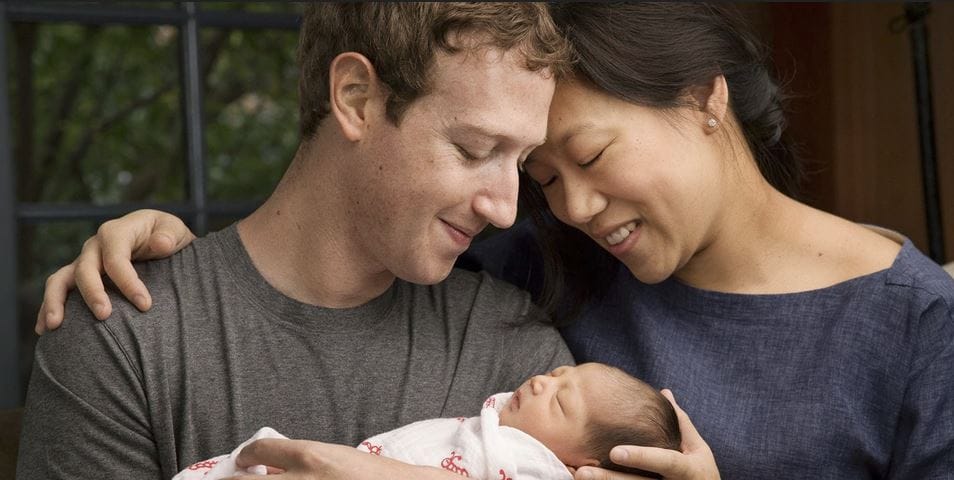
As a concrete illustration of this principle, ponder the envy-filled "progressive" "social justice" warrior Devon Maloney's response to Zuckerberg's donation of 45 billion dollars to charity:Studies have shown that billionaire altruists like Zuckerberg are increasingly directing the course of American science, for example, and can supercharge research that has otherwise been bogged down in public sector and governmental bureaucracy – thus saving thousands if not millions of lives. But it also means that the rich are still effectively buying the future they’d like to see, no matter how selfless their intentions may be.
Apparently they should build a future that Maloney wants to see.International philanthropy and the western world’s desire to eradicate poverty and disease can’t ever truly rid themselves of their imperialist roots; as many critics have pointed out, the white savior industrial complex has never been more pervasive in global culture. When you have an extra $45bn lying around, nothing you do with that money will come without strings, whether you craft those strings or not. Simply by creating and overseeing the world’s largest social network and one of the most influential corporations on Earth .... Mark Zuckerberg himself continues to reproduce the inequality he and his wife are taking aim at with their pledge. [...] if it took Max Chan Zuckerberg’s birth to give her parents the courage and determination to destroy their own ivory tower for the needs of the many, we should all be praying that she’ll get a few more siblings in the coming years.
One wonders what kind of Ivory Tower of envy and hatred Maloney lives in.Zuckerberg and other entrepreneurial businessmen have the ability to create values (like Facebook) and make money at the same time -- Maloney has little or none. Ergo the "white industrial complex/ivory tower" (capitalism) is wrong and must be destroyed.Quoting from Galt's Speech in Atlas Shrugged:They do not want to own your fortune, they want you to lose it; they do not want to succeed, they want you to fail; they do not want to live, they want you to die; they desire nothing, they hate existence, and they keep running, each trying not to learn that the object of his hatred is himself . . . . They are the essence of evil, they, those anti-living objects who seek, by devouring the world, to fill the selfless zero of their soul. It is not your wealth that they’re after. Theirs is a conspiracy against the mind, which means: against life and man.
Dec 3, 2015 | Business, Politics
Two views on the Zuckerberg donation.Complains Jesse Eisinger on How Mark Zuckerberg’s Altruism Helps Himself at the NY Times, "superwealthy plutocrat" Zuckerberg's charity LLC will allow him to donate money to charity and avoid paying taxes on the money donated to charity.Society, through its elected members, taxes its members. Then the elected officials decide what to do with sums of money. In this case, it is different. One person will be making these decisions.
... I think I might do a good job allocating $45 billion. Maybe even better than Mr. Zuckerberg. I am self-aware enough to I realize many people would disagree with my choices.
... Mega-donations, assuming Mr. Zuckerberg makes good on his pledge, are explicit acknowledgments that the money should be plowed back into society. They are tacit acknowledgments that no one could ever possibly spend $45 billion on himself or his family, and that the money isn’t really “his,” in a fundamental sense. Because [if] that is the case, society can’t rely on the beneficence and enlightenment of the superwealthy to realize this individually. We need to take a portion uniformly — some kind of tax on wealth.
Compare this to the eloquent Ross Kaminsky on Not Giving Back, Just Giving | The American Spectator:Still, when the uber-wealthy promise to give away their fortunes, there’s a part of me that can’t help but anticipate with some annoyance the inevitable fawning reactions of the commentariat that the particular billionaire is “giving back” — as if he or she had taken something, as if depleting a fortune is more newsworthy or praiseworthy than earning it (even though earning it seems more difficult and a precondition for giving it away).
... the Chan-Zuckerberg letter betrays an unfortunately collectivist mentality, discussing their “moral responsibility” and urging people to “collectively direct our resources,” as if resources are “ours” instead of “theirs” or “yours” or “mine.” Unless a person inherited or stole his riches — and I don’t believe that anyone mentioned above falls into that category — both in moral and economic terms the wealthy have by definition already given back.
....After years of hearing the twisted jealousy of the left, too many Americans believe that billionaires are “takers” and therefore have a duty to “give back.” That turns reality — and morality — on its head. These people have been wildly successful because they have made the lives of millions of human beings wildly more productive, secure, healthy and even fun.
.... Their affluence is a measure of their contributions to society, not their impoverishing of it. As laudable as it is that Mark Zuckerberg and other participants in the Giving Pledge direct their wealth toward charitable enterprises that reflect their goals and values, what should truly be celebrated is that they were able to earn those fortunes to begin with. No matter how well the billionaires target their altruistic impulses, they have improved our lives more by making their fortunes than by disposing of them.
Dec 2, 2015 | Business, Politics
Alex Epstein explains The Truth About Mark Zuckerberg's Letter To His Daughter - Forbes:
...Every problem that Zuckerberg says he cares about has been solved by political-economic freedom: the liberation of individuals from coercion by one another and by government. If that freedom existed in the impoverished world then the impoverished world would quickly become prosperous. What will not make the impoverished world prosperous–or free–is for billionaires to dole out huge sums of conspicuous charity to unfree people while doing absolutely nothing to fight for their freedom.[...]And yet when billionaires like Mark Zuckerberg and Bill Gates talk about improving energy access or environmental quality around the world, they steer clear of challenging the anti-freedom governments and anti-freedom ideas that cause these problems. Quite often, they embrace anti-freedom ideas–such as the movement to force us to use the most expensive, unreliable sources of energy such as solar and wind. All of this is based on a fundamental pretense–that what moves life forward is people like them doling out wealth–instead of people like all of us living in free societies where we can create our own wealth.This pretense is psychologically convenient. It makes the billionaire feel good about himself and often enables him to win back some of the approval he lost by making so much money. Importantly, a billionaire doling out a lot of money requires no independent thought or courage whatsoever–whereas fighting for freedom requires a lot of it, because fighting for freedom is always connected to controversial issues.[...]And thus what we have is a world in which the world’s most brilliant business minds, minds that have reached their potential only because of freedom, do absolutely nothing to promote freedom. When was the last time that you saw a prominent billionaire businessman take a courageous stand for freedom, a stand that would invite disapproval but was nevertheless the right thing to do?
Well said.