

New Ideal: Storming of the U.S. Capitol
https://youtu.be/jHZwu1V7Lq0On Jan. 6 a mob stormed the U.S. Capitol Building because they were upset with the results of the presidential election. How did this happen -- in America? What, fundamentally, enabled this shameful event? What philosophic ideas and trends brought us here? And, what do they portend for the future of freedom? Join Onkar Ghate and Elan Journo as they analyze the moral meaning, the implications and the consequences of the attack.
Free Market Alternatives to Social Media “Spying” and “Censorship”
Here are a few alternatives to Goole Search, Facebook, Twitter, WhatsApp Messenger with less filtering restrictions and/or more privacy.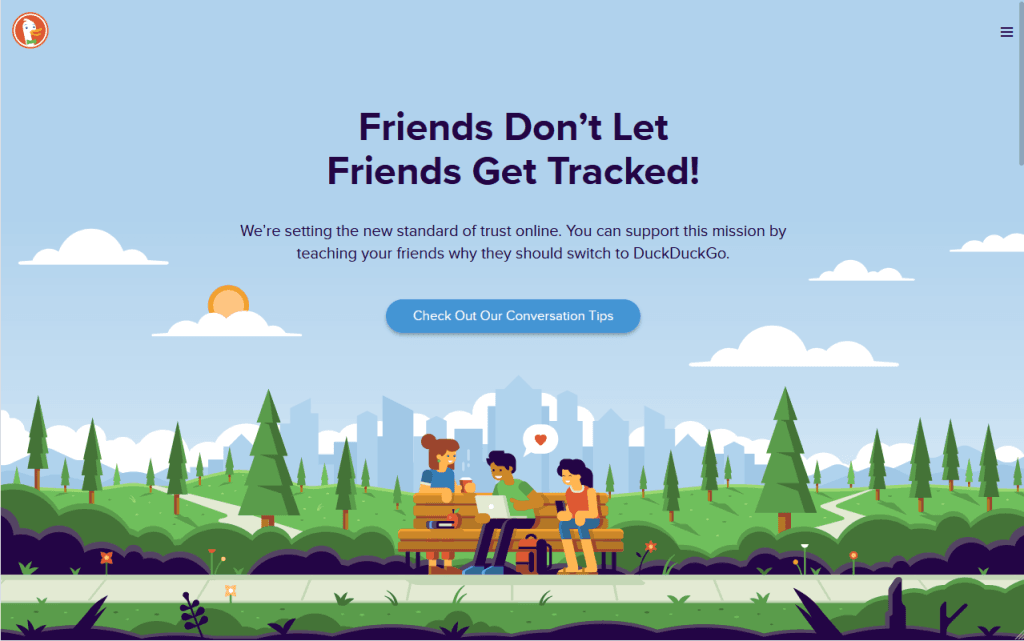
Duck Duck Go: Pro-Privacy Alternative to Google Search
Duck Duck Go makes use of google search results but without tracking you and it seems to not have the filtering problems associated with the mysterious google "algorithm."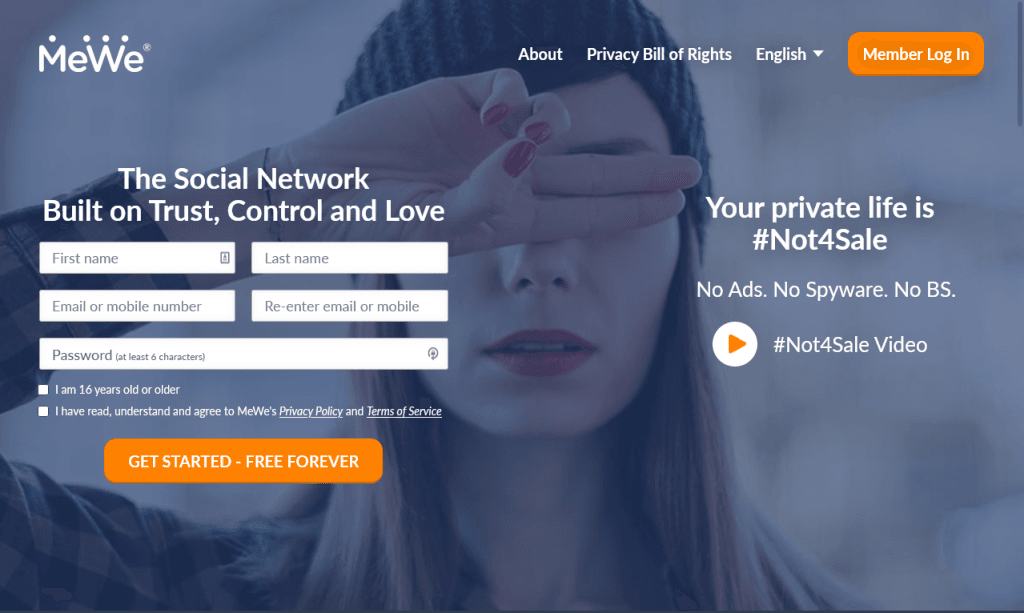
MeWe: The No Ad, No SpyWare Alternative to Facebook
MeWe does not data mine or sell your private data. No ads either. Your feed has nothing but content from those you follow.
Parler: "Free-Speech" Alternative to Twitter
Parler is a popular "free-speech" alternative to Twitter.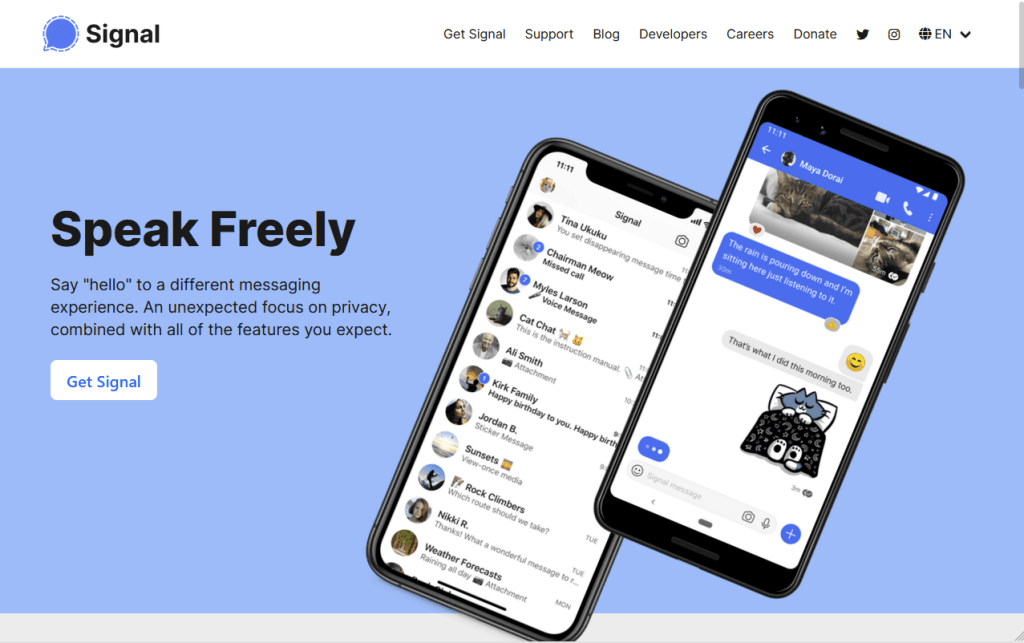
Signal: Alternative to WhatsApp & Facebook Messenger
Signal is the messaging app for people worried about their privacy. It’s end-to-end encrypted, free, and available on all major mobile platforms. Used by Ed Snowden and the U.S. military. Have a recommendation? Let us know.Andrew Bernstein: Finding Your Passion
https://www.youtube.com/watch?v=vEOdDGSZGt4&feature=youtu.beDr Andrew Bernstein on discovering the values you want to pursue in life.Watkins Interview with John Stossel on Persuading through Stories
Don Watkins discusses John's career, how to tell powerful stories about liberty, and what liberty advocates can do to make their ideas more appealing to journalists. https://youtu.be/vZ2yUgdxE0MGhate: A Pro-Freedom Approach to Infectious Disease
“A Pro-Freedom Approach to Infectious Disease: Planning for the Next Pandemic” is the Ayn Rand Institute’s white paper on America’s response to the coronavirus pandemic, authored by the Institute’s chief philosophy officer, Onkar Ghate. You can read it online or download a PDF.Some key points made by Ghate include:He concludes with the following:
- We must not commit the error of assuming the only form of effective action is coercive, governmental action. That assumption is un-American: it is prejudiced against freedom.
- Instead of admitting that their lockdowns were panicked reactions to months of inaction, our elected officials continued to order us around as though the economy and the entire country were the government’s property.
- In a free society the government’s public health goal is and must be different from minimizing at all costs the number of deaths from an infectious disease.
- America is the land of self-responsibility. We each must think how health is best achieved and disease best avoided in our individual circumstances.
- There is no such thing as “our” health or “our” wealth. There is only the specific health and wealth — the specific lives and livelihoods — of separate individuals. To ask government to “balance” these two is a euphemism for asking it to decide who will be sacrificed to whom.
- “Flatten the curve” graphs assume that the supply of healthcare is projected to remain stagnant. Why? If providers could profit from meeting the increase in demand, no one would think of healthcare capacity as a flat line.
- Government-controlled healthcare means rationed healthcare. It is our government’s responsibility to explain clearly how healthcare will be rationed in a pandemic.
- We must have the freedom to think and act for ourselves. If the law focuses government on the task of testing, isolating and tracking carriers and removes government’s power to order statewide lockdowns, we will have that freedom.
- Government must specify when an infectious disease rises to a level severe enough to warrant coercive intervention. And when the threat from an infectious disease is severe enough, government must act to end the threat posed by carriers.
- Government’s powers must be highly circumscribed. It certainly should not possess anything resembling the power to order coercive statewide lockdowns. The guiding principle is that when government lacks specific evidence about a threat, it cannot act.
- Most people will take voluntary countermeasures if they are given reason to do so.
- Had the government been forced to adopt a more surgical approach because the use of the blunt instrument of statewide lockdowns was prohibited, its actions would have been both less destructive and more effective.
- What we need and what is realistically achievable is an approach to infectious disease that codifies into law the best aspects of what Taiwan, South Korea and Sweden have implemented.
- Voluntary countermeasures, not coercive statewide lockdowns, are what the 2017 CDC guidelines for an influenza pandemic as severe as that of 1918 recommend.
- Vital to South Korea’s success is that it appreciates the need to test widely but does not assume this means government must control all aspects of testing.
- Only when we have codified into law the government’s goal — to neutralize active carriers of sufficiently threatening diseases — and its delimited powers — to test, isolate and track — will we get an American response to an infectious disease pandemic.
- The government of a free society has the responsibility to monitor the threat from infectious diseases, to be actively on the lookout for new ones like Ebola or Zika or COVID-19.
- The basic issue is to define when coercive action against the carrier of an infectious disease is warranted because the threat he poses to others is severe enough.
- On the positive side, we need the law to focus government with laser-like precision on its proper goal: to remove the active threat posed by carriers of severe infectious diseases.
- Second, on the negative side, the law must strip federal and state governments of the power to lock down entire states or even just cities in the name of public health.
- What we need and what is realistically achievable is an approach to infectious disease that codifies into law the best aspects of what Taiwan, South Korea, and Sweden have implemented.
- Write to your representatives in state and federal governments. And then keep contacting your representatives until they make the necessary legislative changes.
***
Benjamin Bayer has a summary "We can maintain a free society while effectively addressing pandemic" published in the OC Register.