
Section 230 has been called the law that created Internet as we know it. It accomplished this through a simple premise: You are responsible for what you say or do online and the platform that hosts your content is not. This shield against intermediary liability has allowed countless online services, from the biggest names in Silicon Valley to the website currently being invented in an entrepreneur’s garage, to grow and operate on a global scale. Nascent companies deserve the same playing field that today’s industry leaders enjoyed in their early days. Without fear of being held liable for the enormous volume of content generated by their users, a new generation of platforms—perhaps with content moderation more to the liking of critics on both the left and the right—can come into being. If Section 230 were to be repealed, or even watered down, this next generation of platform will likely be thwarted by liability threats. “Big tech” firms have the resources to comply with new mandates and regulations, so erecting this barrier to entry to nascent firms will artificially lock currently dominant firms in their lead positions.For further reading:

Thoughts on 2020 U.S. Election “Ad-Hoc” Rule Changes and Election Integrity
"Last-minute changes to longstanding election rules risk other problems too, inviting confusion and chaos and eroding public confidence in electoral out-comes" – Supreme Court Justice Gorsuch
Ron Pisaturo recently commented on the "burden of proof" regarding the U.S. 2020 Presidential Election. He writes:"The burden of proof should always be on those who seek to certify an election. That burden is especially difficult in a close election. That burden has not been met in the 2020 election for President."In a year when the number of mail-in ballots increased by an order of magnitude, safeguards should have been increased. Instead, the safeguards were reduced. Indeed, state officials went so far as to circumvent state law in order to reduce safeguards. Requirements for voter and witness signatures were reduced or eliminated. Requirements for voters receiving blank ballots by mail were reduced or eliminated. Requirements for dropping off completed ballots were reduced or ignored. Regional counting centers were set up for the first time, requiring more transit of ballots, and allowing for enormous counting rooms so that official observers could be corralled far away from the action they were entitled to observe—yet still be told that they could not complain because, after all, they were in the room.Evidence of illegal votes—minors voting, non-citizens voting, non-residents of states voting, individuals voting more than once, individuals without residential addresses voting, late votes being counted, broken chains of custody of ballots—has been identified, impacting many thousands of votes, far more than the slim margins of victory in more than enough states to swing the election. Instead of investigating this evidence, state officials have ignored it, or—worse—have obstructed investigations into this evidence."Hundreds if not thousands of sworn affidavits have testified to violations of election law or to outright fraud, again impacting many more votes than the margins of victory in various states. Instead of investigating these allegations, state officials have ignored them and obstructed attempts to investigate these allegations."The courts have mainly refused to consider the evidence, on the grounds of standing or laches. Plaintiffs were deemed either too early, with no harm yet inflicted, or too late. Three Wisconsin Supreme Court Justices who actually considered evidence decided in favor of President Trump. But in most cases, when courts did consider evidence, the standard of evidence applied was that of a criminal case—though plaintiffs had a tiny fraction of the time usually needed in a criminal prosecution, and in the absence of investigation or even cooperation by law enforcement and other government agencies. This posture by the courts gets wrong the burden of proof in this matter. The certifying of an election is a positive act, requiring proof of diligence in upholding the law to secure the election."Mr. Pisaturo argues later that based on this line of reasoning, "State legislatures, elected by the people, could select electors. The U.S. House, elected by the people, could elect the President."You can read the full post here.Though I agree that the removal of election safeguards may have determined the final election result, I'm afraid I have to disagree with his remedy as the over-turning of results requires legal proof of fraud.
That there may be fraud is not legal proof that there is fraud
I agree that the "ad hoc" rule changes imposed by Democrat activists via judicial activism in the courts have enabled the ability to commit and hide massive fraud and may have determined the election's outcome. However, I disagree that the election results declaring Biden-Harris the winner should be over-turned as it has not been legally proven that fraud determined the election result.In this article, I will only be dealing with the Democrats opening "the door to fraud" in various states before the election by various "ad hoc" election rule changes that reduced or eliminated election fraud safeguards. I will not be making any comments on the allegations of actual fraud committed during the election (which would require at bare minimum a thorough review of all the court cases and associated evidence).Biden's chief virtue in this election was that he was not Donald Trump.
To set some context, though I was pulling for the Democrats to lose, I thought Trump would lose the election without "last-minute changes to longstanding election rules, "so I have no "skin in the game" in this respect. Like, Hilary Clinton, Trump's unpresidential personality (watch the first 2020 Presidential debate if you can stomach it) created a large block of voters who would vote for an imaginary candidate to ensure Trump did not get elected.For many Democrats and "Never Trump" Republicans, Biden was not an ideal candidate. Biden's chief virtue in this election was that he was not Donald Trump. It is Donald Trump who made a non-entity as Joe Biden becoming President possible.As I was picking, though not pulling for, Biden-Harris to win (I am not pro-Trump, as much as anti-Democrat), my issue in this article is not with the election outcome but with the means of achieving it.Last-minute ("ad-hoc") changes to long-standing elections rules decreased election integrity
One issue I have with the ad-hoc rule changes regarding the implementation of universal (as opposed to absentee) mail-in voting is that it permits 'ballot harvesting' that makes it near impossible to detect certain kinds of fraud.What is to stop someone from creating ballots for those who do not vote, or creating ballots that had a different candidate selected and switching them in, or simply destroying ballots in between the point of voter drop off and receipt at the counting station? Recounting would not detect fraud of this kind.In the case of creating fake ballots for mail-in voters, such fraud would not be detected unless a voter who was not expected to vote in person finds out that they had already voted by mail when they appear at the polling station on election day. To detect such fraud would require a year-long discovery investigation — and even then, it could come up inconclusive.Last-minute ("ad-hoc") changes were not justified because of the pandemic
Given Fauci's declaration that in-person voting is as safe as going to the supermarket so long as one observes social distancing guidelines and wears a mask (and isn't the Democrat party the party of masks?), the "because COVID" excuse for these changes is groundless. Such game-rigging brings up the aphorism: "Our ends are noble, therefore by any means necessary."The problem with the new "universal" vs. traditional "absentee" mail-in ballots: fewer safeguards against fraud
As John R. Lott pointed out (months before the election) in "Why Do Most Countries Ban Mail-In Ballots?: They Have Seen Massive Vote Fraud Problems ":"Thirty-seven states have so far changed their mail-in voting procedures this year in response to the Coronavirus. Despite frequent claims that President Trump's warning about vote fraud/voting buying with mail-in ballots is "baselessly" or "without evidence" about mail-in vote fraud, there are numerous examples of vote fraud and vote-buying with mail-in ballots in the United States and across the world. Indeed, concerns over vote fraud and vote buying with mail-in ballots causes the vast majority of countries to ban mail-in voting unless the citizen is living abroad."There are fraud problems with mail-in absentee ballots but the problems with universal mail-in ballots are much more significant. Still most countries ban even absentee ballots for people living in their countries."Most developed countries ban absentee ballots unless the citizen is living abroad or require Photo-IDs to obtain those ballots. Even higher percentages of European Union or other European countries ban absentee for in country voters. In addition, some countries that allow voting by mail for citizens living the country don't allow it for everyone. For example, Japan and Poland have limited mail-in voting to those who have special certificates verifying that they are disabled."France has made an exception this year to the ban on absentee ballots to those who are sick or at particular risk during the Coronavirus pandemic. Poland and two cities in Russia have adopted mail-in ballots for elections this year only, but most countries haven't changed their regulations."France banned absentee voting in 1975 because of massive fraud in Corsica, where postal ballots were stolen or bought and voters cast multiple votes."His entire paper is worth reading to understand the problems with universal mail-in ballots as presently implemented.Kimberly Strassel also notes:
"…the beauty of ballot harvesting is that it is nearly impossible to prove fraud. How many harvesters offered to deliver votes, only to throw away inconvenient ones? How many voters were pushed or cajoled, or even paid–or had a ballot filled and returned for them without their knowledge? And this is before questions of what other mischief went on amid millions of mailed ballots (which went to wrong addresses or deceased people) and reduced voter verification rules." [See Kimberley Strassel: The 2020 Election "Fix".]
The "fraud" was in the rule changes that enabled mail-in voting without the proper checks and safeguards
How does the voter – or a third party – determine that a mail-in universal ballot was actually for the candidate the voter chose? Under the present set-up in the 2020 election, one cannot verify a valid result without letting the voter view his mail-in universal ballot and verifying its' accuracy (assuming the ballot has not already been destroyed). No such mechanism (such as blockchain) was put in place to go along with the ad-hoc rule changes.Such ad-hoc rules make the same criminal standard "onus of the proof" under in-person voting to show fraud inapplicable as the "fraud" was in the rule changes. Under such an arrangement with the greater potential of fraud built-in, the "burden of proof" for indicating fraud with universal ballots needs to be different from those used with in-person voting (and absentee balloting).Most courts have applied the principle of standing or laches to dismiss such claims of fraud by Trump supporters without further investigation (on procedural and not substantiative grounds), though not without minority judge opposition. Laches is "the legal doctrine that an unreasonable delay in seeking a remedy for a legal right or claim will prevent it from being enforced or allowed if the delay has prejudiced the opposing party. The doctrine is an equitable defense that seeks to prevent 'legal ambush' from a party who is negligent in failing to timely make a claim." Read a key Wisconsin election court case to understand how this was applied.The chaos created by "last minute" election rule changes erodes public confidence
The ad-hoc election rule changes pushed on by Democrat activists, administrators, and judges using COVID as an excuse to conspire together against the will of elected state legislatures were unnecessary and have given Trump an avenue to claim the election was stolen from him.Supreme Court Justice Gorsuch predicted such a contested outcome before the election:"The Constitution provides that state legislatures—not federal judges, not state judges, not state governors, not other state officials—bear primary responsibility for setting election rules. Art. I, §4, cl. 1. And the Constitution provides a second layer of protection too. If state rules need revision, Congress is free to alter them. Ibid. ("The Times, Places and Manner of holding Elections for Senators and Representatives, shall be prescribed in each State by the Legislature thereof; but the Congress may at any time by Law make or alter such Regulations . . ."). Nothing in our founding document contemplates the kind of judicial intervention that took place here, nor is there precedent for it in 230 years of this Court's decisions."[…]The clamor for judges to sweep in and address emergent problems, and the temptation for individual judges to fill the void of perceived inaction, can be great. But what sometimes seems like a fault in the constitutional design was a feature to the framers, a means of ensuring that any changes to the status quo will not be made hastily, without careful deliberation, extensive consultation, and social consensus. [See: U.S. Election 2020: Last Minute Rule Changes Responsible For Election Confusion, Chaos and Low Public Confidence in Results.]Gorsuch presents additional arguments on why this was an inappropriate use of judicial activism to rewrite election law (see Tara Smith's insightful editorial on the appropriate use of judicial activism). Continues Gorsuch:
"Last-minute changes to longstanding election rules risk other problems too, inviting confusion and chaos and eroding public confidence in electoral out-comes. No one doubts that conducting a national election amid a pandemic poses serious challenges. But none of that means individual judges may improvise with their own election rules in place of those the people's representatives have adopted."One post-election Rasmussen poll indicated that "Sixty-two percent (62%) of Republicans say it's Very Likely the Democrats stole the election, a view shared by 17% of Democrats and 28% of voters not affiliated with either major party." Trump sycophants would naturally agree with Trump's claims of election fraud, but I find it remarkable that in this poll, nearly 1 in 5 Democrats "think the Democrats stole the election."That is a considerable erosion of confidence.Given that Biden-Harris won under such a "set up," the 2020 Presidential election's validity will always be questioned. This is unfortunate.
Restoring election confidence and integrity
I am not saying the election was stolen. I'm saying I don't know as the appropriate "checks and balances" provided by "longstanding election rules" were removed in this election. As I wrote previously:"The mass fraud did not happen on election day; it happened much before."The "fraud" or "fix" was in the rules of the game before the election even began."In an election based on objectively valid rules, the onus of the proof for election fraud requires one to produce positive evidence of fraud."But for an election based on invalid rules – which reward fraud and help hide it – does the same principle apply? Is objectivity in evaluating the results of an election with non-objective rules even possible? It is uncertain that the kind of investigations going on now can uncover that kind of fraud."To validate an election, one does not need to falsify all allegations of fraud merely; one needs to positively show that the mechanism in place has revealed the voter's actual intent. The removal of many time-tested election safeguards in the 2020 election has cast doubt on that mechanism.
Congress should form an Election 2020 Investigation Commission
Given that many of the cases surrounding electoral irregularities were denied a substantial review by the courts and given a procedural dismissal, Congress should form an Election 2020 Investigation Commission to investigate the matter thoroughly.Hopefully, in the future, if the U.S. continues to use "universal" mail in voting for elections, they need to implement the appropriate checks and safeguards to ensure election integrity and to restore confidence in American elections.Congress should certify Biden-Harris as the Presidential election winners
I think the election results with Biden-Harris as the victor should be certified as the time to contest "ad hoc" election rules is before the election.[1]If Trump and the Republicans failed to accomplish this before the election, it is unfair to voters who acted in good faith and voted with mail-in ballots to have their votes repealed after the election. This was the reasoning behind dismissing his claims based on the grounds of standing or laches. [2] [3]Biden-Harris will be certified as the winner and will end up occupying the White-House, but it won't be pretty. The stink over the election rule changes made by the Democrats will give Trump a "moral" victory that he would not have had if the Democrats left longstanding election rules in place and did not tinker with election rules allegedly "because of COVID."— Mark Da Cunha Update (2021.01.07): Like other commentators, I was hoping Congress would peacefully certify Biden-Harris as the winners and also establish as a sign of good-will an Election 2020 Investigation Commission to give an outlet to those Americans who believe the 2020 election was stolen. Unfortunately, when I said "it won't be pretty," it became far worse than I thought, as an idea of a bi-partisan Election 2020 Commission was pushed aside as a mob of MAGA hat and flag-waving anarchists stormed the U.S. capitol, eliminating any "moral" sympathy for the Trump side.Update (2021.01.11): Steve Hayward makes similar points in "They Stole It Fair And Square" at Powerline:"The Democrats stole the election fair and square. Of course, I don't mean that literally; what I mean is that the election was effectively stolen months ago before any ballots were cast when legislatures (and sometimes governors and state courts such Pennsylvania) changed the voting rules to allow expanded mail-in voting, and the cascade of related vulnerabilities that followed. Republican legislatures that went along with these COVID-induced panic changes were foolish if not derelict in their duty. And the Trump campaign was negligent in not fighting against this months ago. President Trump was correct to warn about this outcome. Why wasn't his campaign better organized to resist this months ago? (I know they did file a few lawsuits, a few of which had some effect, but it wasn't enough.) I suspect the long-rumored campaign infighting and attention to other things distracted Trump's senior campaign managers from paying sufficient attention to this.Fraud is very easy in our election system. Remember that our elections are run by part-timers, amateurs, and volunteers on the county level in America—and we have over 3,000 counties. In such a diffuse system it is easy to conjure up a few dozen votes here, a few hundred votes there. Or worse. It is at once a glory of self-government in America that we actually conduct our elections in this decentralized way involving tens of thousands of citizen volunteers. It is also astounding that we use such a vulnerable and chaotic system to choose our President."So the problem with vote fraud is that a remedy is difficult to apply. There aren't good remedies. If a race is within a few hundred votes or less, a recount or ballot challenges can work to reverse the outcome, though not often. The plain fact is that once a fraudulent ballot is inside the ballot box and counted, it is very hard to get it back out of the box and un-counted. Fraudulent ballots need to be intercepted before they reach the ballot box. It is likely not possible to disqualify enough ballots to change the outcome in three states, which is what Trump would need. The statistical anomalies of this election are good circumstantial evidence of vote fraud, but exactly which ballots, or which vote totals, do you change, and how?"No court is going to overturn an election result on circumstantial evidence and affidavits of incorrect polling place procedure alone. (I reserve judgment for the time being about the Dominion computer system question.) And the thorough fact-finding necessary for judicial intervention would take time that we haven't got. This is why both the Constitution and most state election statutes make the legislatures the arbiters of presidential election results."(A "hat tip" for the above quote to Gus Van Horn also mentions possible voter fraud in the 2018 California election via "ballot harvesting.") Notes:[1] Ronald Pisaturo had pointed out to me in an email that "The Republican Party did bring a case to the Supreme Court before the election [regarding Pennsylvania], but the court declined to hear the case (in a 4-4 decision), evidently because there was not yet any harm done." He also adds:Regarding the decision by the Wisconsin Supreme Court, did you see this statement in the dissent by Annette Kingsland Ziegler, J. (¶133, p. 12)?:"Under the majority's new rule, a candidate will have to monitor all election-related guidance, actions, and decisions of not only the Wisconsin Elections Commission, but of the 1,850 municipal clerks who administer the election at the local level. And that is just in one state! Instead of persuading the people of Wisconsin through campaigning, the candidate must expend precious resources monitoring, challenging, and litigating any potential election-related issue hoping that a court might act on an issue that may very well not be ripe."I do think that the Republicans should have been better prepared. The. U.S. should have been better prepared at Pearl Harbor. But that does not mean that we forfeit our right to fight after the attack. The Democrats opened the door to fraud before the election. But they also committed fraud during the election. Both actions are heinous, and both should have been fought and still should be fought. This crisis is not about Trump. It is about an election being stolen. That is an attack on our nation. Many voters on both sides acted in good faith, and that good faith is being violated, not by voiding a corrupt election, but by accepting a corrupt election.[2] This article does not cover other electoral irregularities that were denied a substantial review by a procedural dismissal by the courts. See some thoughts on detecting fraud here:[3] Given the U.S. capitol riots during the certification of Biden as President – where much blame is for inciting them is based on Trump's rhetoric post-election – Trump's political career is over.
Related Reading:
- Kimberley Strassel: The 2020 Election “Fix”
- U.S. Election 2020: Last-Minute Rule Changes Responsible For Election Confusion, Chaos, and Low Public Confidence in Results
- Fauci: No Reason People Cannot Vote in Person
- Objectivists and The 2020 U.S. Presidential Election
- John R. Lott: Why Do Most Countries Ban Mail-In Ballots?

John R. Lott: Why Do Most Countries Ban Mail-In Ballots?
John R. Lott points out in "Why Do Most Countries Ban Mail-In Ballots?: They Have Seen Massive Vote Fraud Problems":Thirty-seven states have so far changed their mail-in voting procedures this year in response to the Coronavirus. Despite frequent claims that President Trump’s warning about vote fraud/voting buying with mail-in ballots is “baselessly” or “without evidence” about mail-in vote fraud, there are numerous examples of vote fraud and vote buying with mail-in ballots in the United States and across the world. Indeed, concerns over vote fraud and vote buying with mail-in ballots causes the vast majority of countries to ban mail-in voting unless the citizen is living abroad.There are fraud problems with mail-in absentee ballots but the problems with universal mail-in ballots are much more significant. Still most countries ban even absentee ballots for people living in their countries.Most developed countries ban absentee ballots unless the citizen is living abroad or require Photo-IDs to obtain those ballots. Even higher percentages of European Union or other European countries ban absentee for in country voters. In addition, some countries that allow voting by mail for citizens living the country don’t allow it for everyone. For example, Japan and Poland have limited mail-in voting to those who have special certificates verifying that they are disabled.France has made an exception this year to the ban on absentee ballots to those who are sick or at particular risk during the Coronavirus pandemic. Poland and two cities in Russia have adopted mail-in ballots for elections this year only, but most countries haven't changed their regulations.France banned absentee voting in 1975 because of massive fraud in Corsica, where postal ballots were stolen or bought and voters cast multiple votes. Mail-in ballots were used to cast the votes of dead people. Examples for other countries are provided.You can download the full paper here.
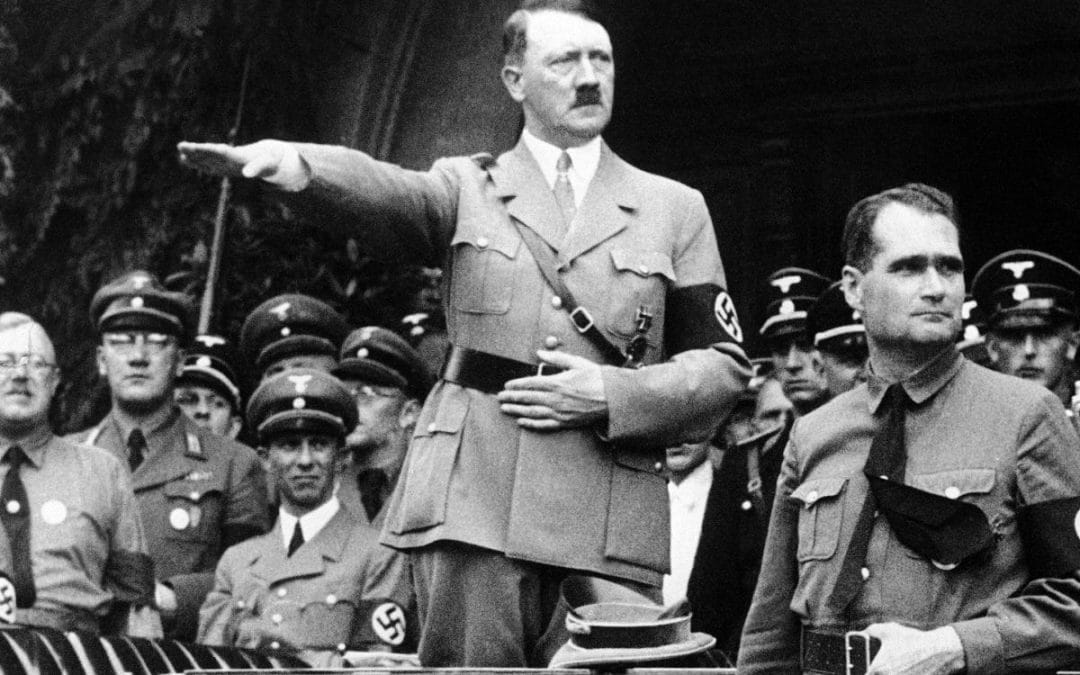
C. Bradley Thompson: German Nihilism, American-Style
Channeling Leonard Peikoff's The Cause of Hitler's Germany, Professor C. Bradley Thompson writes these powerful words in his essay “German Nihilism, American-Style”:Nihilism is born of hatred and resentment. It seeks to destroy. Strauss notes, however, that German nihilism was not absolute nihilism, which must ultimately result not only in the destruction of the “other” but also in the destruction of one’s own self through either individual suicide or a Jonestown-like collective suicide. Pure nihilism represents the highest form of self-hatred and self-abnegation, but German nihilism, particularly in its Nazi form, did pursue something rather than Heidegger’s “das Nichts” (nothingness). The Nazis did seek a “positive” value: their nihilism was mixed with a particular form of hedonism, namely, sadism. According to Strauss, there is reason to believe “that the business of destroying, and killing, and torturing” was a “source of an almost disinterested pleasure to the Nazis as such,” that they derived a “genuine pleasure from the aspect of the strong and ruthless who subjugate, exploit, and torture the weak and helpless.” They loved to hate, destroy, and to make others feel pain and to suffer.But German nihilism was not simply about destruction for the sake of destruction or death for the sake of death. Its ultimate political goal was, as Strauss noted, German world-domination through war for the sake of war. Martial conflict, the young nihilists argued, brought out the best in men. As Strauss put it,Read the rest of German Nihilism, American-Style."The admiration of the warrior type as a type, the unconditional preference given to the warrior as warrior, is however not only genuine in German nihilism: it is even its distinctive feature. Our question: in favor of what does German nihilism reject the principles of civilization as such must therefore be answered by the statement: that it rejects those principles in favor of the military virtues."
Self-sacrifice and self-denial represented the highest form of moral good for the German nihilists and the primary virtue was courage. Strauss was correct to see that the preference for war over peace and war for the sake of war led “for all practical purposes” to “nothing other than destruction.” Kant’s perpetual peace would be replaced by Nietzsche’s perpetual war. But if war—and all that comes with it—is a good in itself, then there can be no justice, only the will to power and the desire to destroy. The young conservative revolutionaries saw in the future not the return to an old past but a new beginning, one for which the end justified the means.At the deepest philosophical level, German nihilism as it was birthed in Nazism represented “a return to a pre-modern ideal, but this pre-modern idea was not to be found in Socrates, Plato, or Aristotle. Its true origin, according to Strauss, was to be found in “pre-socratic philosophy” as described by Nietzsche in The Birth of Tragedy. Here, Strauss pulls no punches: “The relation of Nietzsche to the German Nazi is comparable to the relation of Rousseau to the French Revolution.” And of course, Nietzsche is the link to twenty-first century, right-wing nihilism—American-style.[...] One hundred years after Weimar, the United States of America seems to be entering its own Weimar state of mind, where the forces of the progressive or nihilist Left and those of the reactionary or nihilist Right are competing against each other to destroy the tottering remnants of a free society.
A Sword and a Shield: What is Section 230?
According to one of the bill's co-authors, Senator Ron Wyden:Republican Congressman Chris Cox and I wrote Section 230 in 1996 to give up-and-coming tech companies a sword and a shield, and to foster free speech and innovation online.Essentially, 230 says that users, not the website that hosts their content, are the ones responsible for what they post, whether on Facebook or in the comments section of a news article. That's what I call the shield.But it also gave companies a sword so that they can take down offensive content, lies and slime — the stuff that may be protected by the First Amendment but that most people do not want to experience online. And so they are free to take down white supremacist content or flag tweets that glorify violence (as Twitter did with President Trump's recent tweet) without fear of being sued for bias or even of having their site shut down. Section 230 gives the executive branch no leeway to do either.[...]Without Section 230, sites would have strong incentives to go one of two ways: either sharply limit what users can post, so as to avoid being sued, or to stop moderating entirely, something like 8chan — now operating under the name 8kun — where anonymous users can post just about anything and speech supporting racism and sexism is common.
Here is the actual text (from the U.S. Government Publishing Office):
7 U.S.C. United States Code, 2011 Edition Title 47 - TELEGRAPHS, TELEPHONES, AND RADIOTELEGRAPHS CHAPTER 5 - WIRE OR RADIO COMMUNICATION SUBCHAPTER II - COMMON CARRIERS Part I - Common Carrier Regulation Sec. 230 - Protection for private blocking and screening of offensive material From the U.S. Government Publishing Office, www.gpo.govIn a letter to congress a "Coalition Opposing Changes to 47 U.S. Code § 230 (Section 230) as Part of the National Defense Authorization Act" (23 Dec 2020)wrote:§230. Protection for private blocking and screening of offensive material
(a) Findings
The Congress finds the following:
(1) The rapidly developing array of Internet and other interactive computer services available to individual Americans represent an extraordinary advance in the availability of educational and informational resources to our citizens.
(2) These services offer users a great degree of control over the information that they receive, as well as the potential for even greater control in the future as technology develops.
(3) The Internet and other interactive computer services offer a forum for a true diversity of political discourse, unique opportunities for cultural development, and myriad avenues for intellectual activity.
(4) The Internet and other interactive computer services have flourished, to the benefit of all Americans, with a minimum of government regulation.
(5) Increasingly Americans are relying on interactive media for a variety of political, educational, cultural, and entertainment services.
(b) Policy
It is the policy of the United States—
(1) to promote the continued development of the Internet and other interactive computer services and other interactive media;
(2) to preserve the vibrant and competitive free market that presently exists for the Internet and other interactive computer services, unfettered by Federal or State regulation;
(3) to encourage the development of technologies which maximize user control over what information is received by individuals, families, and schools who use the Internet and other interactive computer services;
(4) to remove disincentives for the development and utilization of blocking and filtering technologies that empower parents to restrict their children's access to objectionable or inappropriate online material; and
(5) to ensure vigorous enforcement of Federal criminal laws to deter and punish trafficking in obscenity, stalking, and harassment by means of computer.
(c) Protection for “Good Samaritan” blocking and screening of offensive material
(1) Treatment of publisher or speaker
No provider or user of an interactive computer service shall be treated as the publisher or speaker of any information provided by another information content provider.
(2) Civil liability
No provider or user of an interactive computer service shall be held liable on account of—
(A) any action voluntarily taken in good faith to restrict access to or availability of material that the provider or user considers to be obscene, lewd, lascivious, filthy, excessively violent, harassing, or otherwise objectionable, whether or not such material is constitutionally protected; or
(B) any action taken to enable or make available to information content providers or others the technical means to restrict access to material described in paragraph (1).1
(d) Obligations of interactive computer service
A provider of interactive computer service shall, at the time of entering an agreement with a customer for the provision of interactive computer service and in a manner deemed appropriate by the provider, notify such customer that parental control protections (such as computer hardware, software, or filtering services) are commercially available that may assist the customer in limiting access to material that is harmful to minors. Such notice shall identify, or provide the customer with access to information identifying, current providers of such protections.
(e) Effect on other laws
(1) No effect on criminal law
Nothing in this section shall be construed to impair the enforcement of section 223 or 231 of this title, chapter 71 (relating to obscenity) or 110 (relating to sexual exploitation of children) of title 18, or any other Federal criminal statute.
(2) No effect on intellectual property law
Nothing in this section shall be construed to limit or expand any law pertaining to intellectual property.
(3) State law
Nothing in this section shall be construed to prevent any State from enforcing any State law that is consistent with this section. No cause of action may be brought and no liability may be imposed under any State or local law that is inconsistent with this section.
(4) No effect on communications privacy law
Nothing in this section shall be construed to limit the application of the Electronic Communications Privacy Act of 1986 or any of the amendments made by such Act, or any similar State law.
(f) Definitions
As used in this section:
(1) Internet
The term “Internet” means the international computer network of both Federal and non-Federal interoperable packet switched data networks.
(2) Interactive computer service
The term “interactive computer service” means any information service, system, or access software provider that provides or enables computer access by multiple users to a computer server, including specifically a service or system that provides access to the Internet and such systems operated or services offered by libraries or educational institutions.
(3) Information content provider
The term “information content provider” means any person or entity that is responsible, in whole or in part, for the creation or development of information provided through the Internet or any other interactive computer service.
(4) Access software provider
The term “access software provider” means a provider of software (including client or server software), or enabling tools that do any one or more of the following:
(A) filter, screen, allow, or disallow content;
(B) pick, choose, analyze, or digest content; or
(C) transmit, receive, display, forward, cache, search, subset, organize, reorganize, or translate content.
(June 19, 1934, ch. 652, title II, §230, as added Pub. L. 104–104, title V, §509, Feb. 8, 1996, 110 Stat. 137; amended Pub. L. 105–277, div. C, title XIV, §1404(a), Oct. 21, 1998, 112 Stat. 2681–739.)
References in Text
The Electronic Communications Privacy Act of 1986, referred to in subsec. (e)(4), is Pub. L. 99–508, Oct. 21, 1986, 100 Stat. 1848, as amended. For complete classification of this Act to the Code, see Short Title of 1986 Amendment note set out under section 2510 of Title 18, Crimes and Criminal Procedure, and Tables.
Codification
Section 509 of Pub. L. 104–104, which directed amendment of title II of the Communications Act of 1934 (47 U.S.C. 201 et seq.) by adding section 230 at end, was executed by adding the section at end of part I of title II of the Act to reflect the probable intent of Congress and amendments by sections 101(a), (b), and 151(a) of Pub. L. 104–104 designating §§201 to 229 as part I and adding parts II (§251 et seq.) and III (§271 et seq.) to title II of the Act.
Amendments
1998—Subsec. (d). Pub. L. 105–277, §1404(a)(3), added subsec. (d). Former subsec. (d) redesignated (e).
Subsec. (d)(1). Pub. L. 105–277, §1404(a)(1), inserted “or 231” after “section 223”.
Subsecs. (e), (f). Pub. L. 105–277, §1404(a)(2), redesignated subsecs. (d) and (e) as (e) and (f), respectively.
Effective Date of 1998 Amendment
Amendment by Pub. L. 105–277 effective 30 days after Oct. 21, 1998, see section 1406 of Pub. L. 105–277, set out as a note under section 223 of this title.
Quotable: Voltaire
“Those who can make you believe absurdities can make you commit atrocities.” -- Voltaire
George Reisman: “Essential” Jobs and Altruism
George Reisman writes on his blog on Non-essential Jobs:Any job on which anyone’s livelihood depends is essential. It is essential to that person and his family. Without it, they may not be able to buy food or pay rent.This is not the view of Gov. Newsom and the other petty tyrants now running amuck in our country and impoverishing and virtually imprisoning tens of millions of innocent people.They believe that to be “essential,” one’s work must be essential to others. To them, only “others” matter, not individuals in and of themselves. On this basis, without a second thought, they issue edicts upon edicts and impose suffering on millions.The philosophical basis for this conception of what is "essential" is the moral code of altruism.Writes Ayn Rand in her essay "Faith and Force: The Destroyers of the Modern World" republished in Philosophy: Who Needs It, on the nature of altruism:
What is the moral code of altruism? The basic principle of altruism is that man has no right to exist for his own sake, that service to others is the only justification of his existence, and that self-sacrifice is his highest moral duty, virtue and value.

Poem: Thought by Berton Braley
You say "I think" ten times a day Or fifteen times, or twenty And even more. Well, anyway You sure repeat it plenty. But pause and ponder half a wink And start your brain-cells clinking; "I think" you say, but do you Think Or only Think you're thinking?How often is the thing you've thought
Out of Yourself created
And not a dictum you've been taught
And simply imitated?
Into a reverie, you sink
And like an owl, you're blinking,
But do you actually Think,
Or only Think you're thinking?"I think," you say - and ladle out
Some fusty old opinion
That probably was known about
In Pharoah's dominion.
Do new ideas ever slink
Into your cranium's chinking?
I wonder - do you really think
Or only Think you're Thinking?Traditions, customs, fill your head
And some of them have virtue,
But most of them have long been dead
They fester there and hurt you.
Son, chuck that clutter in the drink,
Wake up - don't sit there blinking!
Wake up! And then perhaps you'll Think
And not just Think you're Thinking!

The Antitrust Suit Against Facebook is Exactly How Antitrust Is *Supposed* To Work
Facebook’s chief counsel Jennifer Newstead responds to Antitrust Suit in "Lawsuits Filed by the FTC and the State Attorneys General Are Revisionist History":The Federal Trade Commission and state attorneys general today attack two acquisitions that we made: Instagram in 2012 and WhatsApp in 2014. These transactions were intended to provide better products for the people who use them, and they unquestionably did. Both of these acquisitions were reviewed by relevant antitrust regulators at the time. The FTC conducted an in-depth “Second Request” of the Instagram transaction in 2012 before voting unanimously to clear it. The European Commission reviewed the WhatsApp transaction in 2014 and found no risk of harm to competition in any potential market. Regulators correctly allowed these deals to move forward because they did not threaten competition.Now, many years later, with seemingly no regard for settled law or the consequences to innovation and investment, the agency is saying it got it wrong and wants a do-over. In addition to being revisionist history, this is simply not how the antitrust laws are supposed to work.I would not be so sure.Writes philosopher Ayn Rand in her article “Choose Your Issues,” The Objectivist Newsletter, Jan. 1962, 1, on the nature and purpose of the antitrust laws:
The Antitrust laws—an unenforceable, uncompliable, unjudicable mess of contradictions—have for decades kept American businessmen under a silent, growing reign of terror. Yet these laws were created and, to this day, are upheld by the “conservatives,” as a grim monument to their lack of political philosophy, of economic knowledge and of any concern with principles. Under the Antitrust laws, a man becomes a criminal from the moment he goes into business, no matter what he does. For instance, if he charges prices which some bureaucrats judge as too high, he can be prosecuted for monopoly or for a successful “intent to monopolize”; if he charges prices lower than those of his competitors, he can be prosecuted for “unfair competition” or “restraint of trade”; and if he charges the same prices as his competitors, he can be prosecuted for “collusion” or “conspiracy.” There is only one difference in the legal treatment accorded to a criminal or to a businessman: the criminal’s rights are protected much more securely and objectively than the businessman’s.Recommended Reading:
- The Antitrust Laws Require the Government To Initiate Force Against Innocent Citizens
- Mythical Roots of Antitrust: Economic Power vs Political Power
- “Hipster Antitrust”: The Assault on Google, Facebook, Apple and Amazon
- Why Is Facebook’s CEO Mark Zuckerberg Groveling?
- Why The Government Should Leave Amazon, Google, Facebook, and Apple Alone
- Big Tech Giant “Monopoly” Power is Overhyped

What a Billion Dollars Can Buy: Elon Musk’s SpaceX Compared with NASA’s Orion
NASA has spent over 23 billion dollars on the Orion spacecraft - that has yet to be able to take a person into space. Writes Eric Berger in "The Orion spacecraft is now 15 years old and has flown into space just once":The Orion spacecraft dates back to 2005, when NASA issued a "request for proposals" to industry with the goal of "developing a new Crew Exploration Vehicle by 2014 that is capable of carrying astronauts beyond low Earth orbit." NASA sought Orion as a building block to land humans on the Moon as part of what became known as the Constellation program. This program was later canceled, but Orion survived. Since that time, according to The Planetary Society's Casey Dreier, NASA has spent $23.7 billion developing the Orion spacecraft. This does not include primary costs for the vehicle's Service Module, which provides power and propulsion, as it is being provided by the European Space Agency.For this money, NASA has gotten a bare-bones version of Orion that flew [without a crew] during the Exploration Flight Test-1 mission in 2014. The agency has also gotten the construction of an Orion capsule—which also does not have a full life support system—that will be used during the uncrewed Artemis I mission due to be flown in 12 to 24 months. So over its lifetime, and for $23.7 billion, the Orion program has produced:How does that compare to Elon Musk's privately run space initiative, SpaceX?
- Development of Orion spacecraft
- Exploration Flight Test-1 basic vehicle
- The Orion capsule to be used for another test flight
- Work on capsules for subsequent missions
SpaceX is generally considered one of the most efficient space companies. Founded in 2002, the company has received funding from NASA, the Department of Defense, and private investors. Over its history, we can reliably estimate that SpaceX has expended a total of $16 billion to $20 billion on all of its spaceflight endeavors. Consider what that money has bought:The author calls this an "extreme" comparison. Far from it, when comparing the economics of capitalism and socialism it is the norm.
- Development of Falcon 1, Falcon 9, and Falcon Heavy rockets
- Development of Cargo Dragon, Crew Dragon, and Cargo Dragon 2 spacecraft
- Development of Merlin, Kestrel, and Raptor rocket engines
- Build-out of launch sites at Vandenberg (twice), Kwajalein Atoll, Cape Canaveral, and Kennedy Space Center
- 105 successful launches to orbit
- 20 missions to supply International Space Station, two crewed flights
- Development of vertical take off, vertical landing, rapid reuse for first stages
- Starship and Super Heavy rocket development program
- Starlink Internet program (with 955 satellites on orbit, SpaceX is largest satellite operator in the world)

Federal Death Agency: COVID Vaccine Created in January 2020 was Blocked By The FDA Until December 2020
Writes David Wallace-Wells in New York Magazine, "We Had the Vaccine the Whole Time":You may be surprised to learn that of the trio of long-awaited coronavirus vaccines, the most promising, Moderna’s mRNA-1273, which reported a 94.5 percent efficacy rate on November 16, had been designed by January 13. This was just two days after the genetic sequence had been made public in an act of scientific and humanitarian generosity that resulted in China’s Yong-Zhen Zhang’s being temporarily forced out of his lab. In Massachusetts, the Moderna vaccine design took all of one weekend. It was completed before China had even acknowledged that the disease could be transmitted from human to human, more than a week before the first confirmed coronavirus case in the United States. By the time the first American death was announced a month later, the vaccine had already been manufactured and shipped to the National Institutes of Health for the beginning of its Phase I clinical trial. This is — as the country and the world are rightly celebrating — the fastest timeline of development in the history of vaccines. It also means that for the entire span of the pandemic in this country, which has already killed more than 250,000 Americans, we had the tools we needed to prevent it .
The author then goes on to regurgitate "the FDA has to approve it" excuse for not banning the sale of the vaccine until the end of 2020:
To be clear, I don’t want to suggest that Moderna should have been allowed to roll out its vaccine in February or even in May, when interim results from its Phase I trial demonstrated its basic safety.
Well, why the hell not?
Shouldn't that judgment on the efficacy of the vaccine be up to each individual? If you have a high probability of dying from COVID-19 if you get it, the vaccine in February 2020 might be worth the risk.
And why not release it in May 2020 when it was proven "safe" by FDA standards (but not yet proven as "efficacious").
Observe that for 41% of voters; the pandemic was the "most important issue facing the country":

What was the FDA waiting for? For Trump to lose the 2020 Presidential election? I seriously hope not. More likely, it is something worse: bureaucratic inertia with a central planning anti-free-market mindset.
Continues the author on the "reasoning" of the experts:
An unsafe vaccine, like the one for polio that killed ten and paralyzed 200 in 1955, could cause medical disaster and public-health backlash — though, as Balloux points out, since none of the new coronavirus vaccines use real viral material, that kind of accident, which affected one in a thousand recipients, would be impossible. (These days, one adverse impact in a million is the rule-of-thumb threshold of acceptability.) An ineffective vaccine could also give false security to those receiving it, thereby helping spread the disease by providing population-scale license to irresponsible behavior (indoor parties, say, or masklessness). But on other matters of population-level guidance, our messaging about risk has been erratic all year, too. In February and March, we were warned against the use of masks, in part on the grounds that a false sense of security would lead to irresponsible behavior — on balance, perhaps the most consequential public-health mistake in the whole horrid pandemic. In April, with schools already shut, we closed playgrounds. In May, beaches — unable or unwilling to live with even the very-close-to-zero risk of socializing outside (often shaming those who gathered there anyway). But in September, we opened bars and restaurants and gyms, inviting pandemic spread even as we knew the seasonality of the disease would make everything much riskier in the fall. The whole time, we also knew that the Moderna vaccine was essentially safe. We were just waiting to know for sure that it worked, too.None of the scientists I spoke to for this story were at all surprised by either outcome — all said they expected the vaccines were safe and effective all along. Which has made a number of them wonder whether, in the future, at least, we might find a way to do things differently — without even thinking in terms of trade-offs.The problem is that "scientists" cannot determine the "trade-offs" for any given individual. Those decisions should be up to the individual, with "experts" providing the facts, allowing each person to decide based on their particular situation and personal priorities, with the government's job to get-out-of-the-way.
Given that the FDA blocked the sale and distribution of a vaccine that could have prevented the death of over a quarter a million Americans, we think the name suggested by Harry Binswanger to be a far more accurate description: Federal Death Agency.
Recommended Reading:
- How a Laissez-faire Capitalist Society Deals with a Vaccine by Harry Binswanger

C. Bradley Thompson on the Merging of the American Left … and Right
Writes Professor Thompson in The Pajama-Boy Nietzscheans: A Critique of the Dissident Right:The publication of my new book, America’s Revolutionary Mind: A Moral History of the American revolution and the Declaration that Defined It, comes at a crucial moment in American history. Academic study of the American revolution is dying on our college campuses, and the principles and institutions of the American Founding are now under assault from the nattering nabobs of both the progressive Left and the reactionary Right. These two ideological antipodes share little in common other than a mutually-assured desire to purge 21st-century American life of the founders’ philosophy of classical liberalism.On this point, the radical Left and Right have merged.The philosophy of Americanism is, as I have argued in my book and elsewhere, synonymous with the founders’ ideas, actions, and institutions. Its core tenets can be summed up as: the moral laws and rights of nature, ethical individualism, self-interest rightly understood, self-rule, constitutionalism, rule of law, limited government, and laissez-faire capitalism.[...]
There was a time, of course, when most Americans (especially conservatives and libertarians) agreed with this assessment. Sadly, that is no longer true.The anti-Americanism of the radical Left is well known and long established. Its most recent and most virulent incarnation comes in the form of the New York Times’s “1619 Project,” which claims that the founders’ principles and institutions were disingenuous in 1776 and immoral today.Much more interesting than the ho-hum anti-Americanism of the progressive Left, though, is the rise in recent years of a rump faction of former Paleo or Tradcons, who have come out of their ideological closet and transitioned from pro- to anti-Americanism. The recent rise of the radical Right in America is distinguished from all previous forms of conservatism and libertarianism by its explicit rejection of the founders’ liberalism.A new generation of neo-reactionary ideologues looks at contemporary America and sees nothing but moral, cultural, and political decay, which they blame on the soullessness of the founders’ Americanism. Remarkably, just like the radical Left, the radical Right condemns the philosophy of 18th-century liberalism as untrue and therefore immoral. It is the source, they claim, of all our present discontents.Read the rest.
40% of U.S. COVID-19 Deaths Occur in Long-Term Care (LTC) Facilities
 Note: In NY if a person contracted COVID-19 in LTC facility and dies in the hospital, NY counts it as a hospital death and does not attribute it the LTC.
"...the Long-Term Care COVID Tracker is the most comprehensive dataset about COVID-19 in US long-term care facilities. It compiles crucial data about the effects of the pandemic on a population with extraordinary vulnerabilities to the virus due to age, underlying health conditions, or proximity to large outbreaks.The dataset compiles all currently available information of COVID-19 cases and related deaths in long-term care facilities—nursing homes, skilled nursing facilities, assisted living facilities, and other care homes—and tracks both residents and staff.One solution is to "bubble" the home and have staff live full-time on-site during the pandemic:
Currently, most senior homes rely on checkpoints to screen staff as they arrive to work, mainly by asking them questions and taking their temperatures. But these checkpoints can easily fail, because people without symptoms can carry and transmit the coronavirus. Moreover, many staff members work at multiple homes or have family members who work at other facilities. Many senior homes also have been preparing for the pandemic by hiring extra staffers. So it is hardly surprising that the contagion has spread like a chain reaction in senior care homes.[...]A better approach is to pay front line aides and nurses to live on-site through the period when the disease is surging — meaning right now. This is hardship work, requiring staff to work 60 to 80 hours a week without seeing family members. But it could be the best way to protect our elderly. Lowering the number of infections at our senior homes would also allow us to conserve protective equipment, reduce the need for hospital beds and prevent the spread of the disease into communities where staff members live.[...]The result?At homes overwhelmed by Covid-19, having caregivers live on-site would prevent them from bringing the virus home to their families or spreading it through communities, particularly when they commute.
Looking ahead, Covid may recede for much of the country this summer, but I fear that senior homes will remain vulnerable to a new wave of infection. We can prepare for that by having our staff live in our homes.
The result has been promising; we have yet to have a confirmed case of Covid-19 among our residents or staff.Unfortunately, it is more expensive:
But I cannot afford it for much longer, and many other senior care centers could not afford to even start such a program.Hat Tip: Phil Magness

Fascism: Why Billionaires and Corporate Officials Support the Democratic Party
Writes Richard Salsman on why "Biden’s Disdain for Shareholders is Fascistic":...“shareholder capitalism” is redundant, and “stakeholder capitalism” is oxymoronic. The former is genuine capitalism: private ownership (and control) of the means of production (and its output, too). The latter is fascism: private ownership but public control, imposed by non-owners. Socialism, of course, is public (state) ownership and public control of the means of production. Capitalism entails and promotes mutually beneficial contractual responsibility; fascism destroys that, by brutally severing ownership and control.Which of these political-economic systems does Biden and his allies (Harris, Sanders, Warren, AOC) denounce, and which do they extoll? Is it not obvious? We know. They won’t dare use the word fascism, of course – just its definition. They prefer to reclassify fascism as a form of capitalism (“stakeholder” capitalism) so as to get away with imposing what is radical but not new. Many anti-capitalist academics and journalists, likewise sympathetic to fascism, euphemistically call it ‘corporatism’ or ‘cronyism,’ and pretend it’s a brand of capitalism. Not so. ‘Big money’ controls politics only to the extent politics controls money-making, and for decades left-Democrats have pushed for an ever-greater government subsidization and regulation of business. They encourage and reward corporate cronies – and punish small businesses. This is why most billionaires and major corporate officials support the Democrat Party.Photo by Gage Skidmore
“Je Suis Charlie” in 2020: Elan Journo Talks with Fleming Rose
https://youtu.be/RvbMaqquDEk Elan Journo talks with Flemming Rose, author of The Tyranny of Silence.In 2005, [Rose] was an editor at the Danish newspaper Jyllands-Posten when it commissioned and later published cartoons on the subject of Islam to assess the seeming climate of self-censorship. That decision led to boycotts, deadly protests, and a global crisis. Al Qaeda put Mr. Rose on a hit list, and today when he leaves home, he must be accompanied by bodyguards. We talked about the “cartoons crisis,” which has become shrouded in misconceptions, the worldwide protests and boycotts that ensued, and the massacre at Charlie Hebdo (it had republished the Danish cartoons in support of freedom of speech). Following that attack, millions flocked to the streets of Paris to show their solidarity with the murdered journalists, declaring on banners, “Je Suis Charlie” (“I am Charlie”). What became of that visceral outpouring of support in the years since?
WSJ: A.G. William Barr Resigns
The WSJ presents an opinion piece of Mr. Barr's accomplishments on his resignation today, ostensibly over his statement that there was not enough evidence of voter fraud to overturn the presidential election.Some highlights:...Mr. Barr...wanted to clean up a Justice Department that he rightly knew had been tainted by a corrupt FBI under James Comey and political appointees in both parties who lacked the courage or tenacity to take responsibility for hard prosecutorial judgments.[He navigated] the end of the Robert Mueller probe while protecting the office of the Presidency from unconstitutional conclusions about obstruction of justice. Future Presidents of both parties will thank him.He was willing to endure media and Democratic smears by taking fresh looks at old investigations.... His release of documents has helped to show the FBI probe began in partisan scheming and unlawful practices...Mr. Barr also had the guts to ask another U.S. Attorney, Jeffrey Jensen, to re-examine Mr. Mueller’s prosecution of Michael Flynn. That probe turned up more malpractice and a decision to dismiss charges that never should have been brought......Perhaps Mr. Barr’s greatest contribution was speaking truth to Mr. Trump, who wanted his tormentors prosecuted whether or not the evidence warranted. This resistance chafed on Mr. Trump as Mr. Barr’s tenure went on, and especially when Mr. Durham declined to bring indictments or leak evidence before the presidential election. This was the right decision and shows Mr. Barr’s adherence to principle. ["Thank You Bill Bar", WSJ, 14 Dec 2020]Whether one agrees or disagrees with Barr (his antitrust case against Google is described by the WSJ as "weak") whether revealing the abuses of Democrat "deep state" operatives or willing to disagree with Trump when he believed the facts warranted it, Barr demonstrated an allegiance to the U.S. Constitution, and the rule of law, which is all that one can demand of a public official.
Luminar’s Austin Russell: Another College Dropout Becomes Newest Billionaire
From "Luminar going public makes 25-year-old Austin Russell one of world’s first, and youngest, self-driving billionaires" at CNBC:Luminar, which creates lidar technology critical to many automakers’ autonomous driving efforts, is going public on Thursday through a special purpose acquisition company (SPAC) and the deal will make Luminar co-founder and CEO Austin Russell a billionaire — at the age of 25.Russell, who founded the company as a 17-year-old high school student, said the feeling of becoming a billionaire (on paper, at least) is “absolutely incredible” and “totally surreal.”[...]Russell was a bit of a science prodigy.“I guess, I did memorize the periodic table — I think I was around 2 or so,” Russell told CNBC Make It in a 2018 interview. “I was just obsessed with learning certain things ... just independently learning and understanding a lot of new types of scientific fields, among other things.”That evolved into work on lasers and ultimately, lidar, which uses lasers to detect and measure distance and ultimately create a 3D map of the real world environment that can be used in self-driving.He ended up at Stanford University studying physics, but dropped out and received a Thiel Fellowship, created by tech icon and PayPal co-founder Peter Thiel to provide tech talent with alternatives to traditional education programs.
Salsman: The Intellectuals Assault on American Institutions and Values
"Constitutional capitalist" Professor Richard Salsman elaborates on the assault against America’s institutions and values on The P.A.S. Report Political Podcast:"This assault is not by the hands of a foreign adversary, but by her own intellectuals and the ruling class, including professors, editorialists, policy wonks, pundits, politicians, and entertainers...The battle isn’t simply over capitalism vs. socialism. The battle is over peace, prosperity, and human happiness vs. war, poverty, and human misery."