Jason Hill: Nihilistic Attempts to Abolish History and Grammar

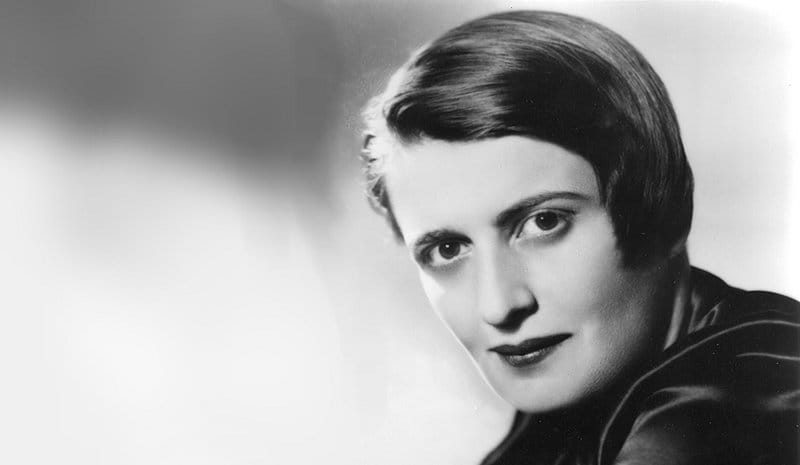
https://youtu.be/9dmc1db5KeUProfessor Jason Hill, author of We Have Overcome, mostly channeling Ayn Rand, made this important statement:
"What we’re seeing in the educational system is systemic nihilism. So let us go back a step further. A couple weeks ago Rutgers University declared that grammar was racist. Now grammar is the science that deals with the proper method of oral and written communication. When you attack grammar you attack language, which is the method of cognition. You attack man’s mind, you attack his ability to reason. So you attack man’s mind, which means you leave us on the level of grunting farm animals, so you leave us incapacitated to reason, to think. And then you take away his history, you take away human history, our Constitutional rights, our Bill of Rights, our Second Amendment, our First Amendment, or time-worn principles that we use to defend our way of life. Our Judeo-Christianity. Your looking at sysemtic nihilism. You are looking at the Anti-Christ as far as I am concerned. You’re looking at a bunch of nihilists and anarchists that want to destroy the system and replace it with nothing – nothing at all. They want to destroy the good for the sake of it being the good. I have been warning about these post-modern nihilists that started back in the 1960s, when we had these fake disciplines attacking reason, valorizing feelings as the only criterion for adjudicating disputes – one’s feelings and one’s feeling of being offended as the only criteria for adjudicating disputes – and dispensing with reason, objective reality, and logic as the construct of imperialist, racist, white men. That’s what we’re seeing today, and so you dispense with history altogether."
Trader Joe’s Fantastic Response To Woke “Racism” Smears

Trader Joe’s Fantastic Response To Woke “Racism” Smears

In response to a rather silly and misinformed so-called petition for "Trader Joe’s: Remove Racist Packaging From Your Products", the company issued a statement "A Note About Our Product Naming" on July 24, 2020.Presented below is the text of the petition:

Trader Joe’s: Remove Racist Packaging From Your Products

We demand that Trader Joe’s remove racist branding and packaging from its stores. The grocery chain labels some of its ethnic foods with modifications of “Joe” that belies a narrative of exoticism that perpetuates harmful stereotypes. For example, “Trader Ming’s” is used to brand the chain’s Chinese food, “Arabian Joe” brands Middle Eastern foods, “Trader José” brands Mexican foods, “Trader Giotto’s” is for Italian food, and “Trader Joe San” brands their Japanese cuisine. Furthermore, the Trader Joe's company takes pride in the fact that the founder, Joe Coulombe, took inspiration in building the Trader Joe’s brand from a racist book and a controversial theme park attraction, both of which have received criticism for romanticizing Western Imperialism and fetishizing non-Western peoples. We learn directly from the Trader Joe’s website that the first Trader Joe’s store:

“had a nautical theme and it was run by people who were described as “traders on the high seas.” At the time, Joe had been reading a book called "White Shadows in the South Seas," and he’d been to the Disneyland Jungle Trip ride, and it all just…coalesced. To this day, Trader Joe’s Crew Members consider themselves “traders on the culinary seas” and are known for their bright, tropical-patterned shirts...”

The book White Shadows in the South Seas was also made into a silent film. This work demonstrates the horrific legacy of trading companies as they exploited and enslaved the South Pacific in the late 19th and early 20th centuries. Many of these regions are still at a disadvantage today because of how traders ravaged their peoples, their societies, and their natural resources. Even though the story calls out the abuses of trading companies, (although it perpetuates other racist tropes such as that of the “noble savage” and “white god” narratives common during this period), “Trader” is still part of the grocery chain’s name. It leaves the question: What in particular about this book inspired the company?Likewise, the Disneyland Jungle Cruise Ride has received criticism of misappropriating Indigenous culture and perpetuating stereotypes of native people as primitive and savage. The ride features animatronic people only identified as “headhunters” and “natives” dressed in some sort (of which culture it is unclear) of traditional dress, performing a dance, and playing music - and threatening violence toward visitors. It has been criticized as exoticism at its worst due to its exhibition of humans as an attraction that otherwise focuses on animals. Given the extensive history of “human zoos” in the United States, this attraction is unacceptable. In addition, these animatronic people only seem to serve as the punchline of jokes as part of the ride’s experience. This particular display of exoticism is especially confusing in the context of Trader Joe’s because it again leaves the question: What in particular about this theme park ride inspired the company?The Trader Joe’s branding is racist because it exoticizes other cultures - it presents “Joe” as the default “normal” and the other characters falling outside of it - they are “Arabian Joe,” “Trader José,” and “Trader Joe San.” The book, White Shadows in the South Seas is racist because it perpetuates the myth of the “white god” and the “noble savage” stereotypes. It becomes even more racist in context because the founder of Trader Joe's said that he was inspired by this book in some way when creating his company, a book which shows traders’ exotification of non-Western peoples turned into violent exploitation and destruction. The Disney Jungle Cruise is racist because it displays caricatures of non-Western peoples alongside exotic animals, as an attraction at a theme park to be gawked at.The common thread between all of these transgressions is the perpetuation of exoticism, the goal of which is not to appreciate other cultures, but to further other and distance them from the perceived “normal.” The current branding, given this essential context, then becomes even more trivializing and demeaning than before. What at first seems, at worst, insensitive, further is called into question.
And here is Trader Joe's fantastic response:

A Note About Our Product Naming

July 24, 2020To Our Valued Customers:In light of recent feedback and attention we’ve received about our product naming, we have some things we’d like to say to clarify our approach.A few weeks ago, an online petition was launched calling on us to “remove racist packaging from [our] products.” Following were inaccurate reports that the petition prompted us to take action. We want to be clear: we disagree that any of these labels are racist. We do not make decisions based on petitions.We make decisions based on what customers purchase, as well as the feedback we receive from our customers and Crew Members. If we feel there is need for change, we do not hesitate to take action.Decades ago, our Buying Team started using product names, like Trader Giotto’s, Trader José’s, Trader Ming’s, etc. We thought then—and still do—that this naming of products could be fun and show appreciation for other cultures. For example, we named our Mexican beer “Trader José Premium” and a couple guacamole products are called “Avocado’s Number” in a kitschy reference to a mathematical theory.  These products have been really popular with our customers, including some budding mathematicians.We constantly reevaluate what we are doing to ensure it makes sense for our business and aligns with customers’ expectations. A couple years ago we asked our Buying Team to review all our products to see if we needed to update any older packages, and also see if the associated brands developed years ago needed to be refreshed. We found that some of the older names or products just weren’t connecting or selling very well; so, they were discontinued. It’s kind of what we do.Recently we have heard from many customers reaffirming that these name variations are largely viewed in exactly the way they were intended­—as an attempt to have fun with our product marketing. We continue our ongoing evaluation, and those products that resonate with our customers and sell well will remain on our shelves.Trader Joe’s has been a unique, fun and neighborly place to shop for over 50 years. We look forward to taking care of our wonderful customers for many future decades.- Trader Joe’s
Yaron Brook comments:Related:Primitivism Versus Prosperity How Trade, Property, and Rule of Law Ended Primitive Life.

Smithsonian: “White Culture” Means Science, Planning for the Future and Hard Work

According to the Smithsonian’s National Museum of African American History and Culture "individualism," “the nuclear family,” "be[ing] polite," "plan[ning] for the future," the “scientific method,” “hard work,” and “delayed gratification” are “aspects & assumptions of whiteness & white culture in the United States.”Data Source: “Some Aspects and Assumptions of White Culture in the United States,” by Judith H. Katz.Related Links: Yaron Brook Show: Cancel Culture & Free Speech, "White Culture" 

Bari Weiss: Twitter has become The New York Time’s Ultimate Editor

Journalist Bari Weiss has resigned from The New York Times as it has replaced "news that is accurate, opinions that are vital, and debate that is sincere" with a " 'new McCarthyism' " of progressive "orthodoxy" where "Twitter has become its ultimate editor."What a terrible work environment to be in.
Dear A.G.,It is with sadness that I write to tell you that I am resigning from The New York Times.I joined the paper with gratitude and optimism three years ago. I was hired with the goal of bringing in voices that would not otherwise appear in your pages: first-time writers, centrists, conservatives and others who would not naturally think of The Times as their home. The reason for this effort was clear: The paper’s failure to anticipate the outcome of the 2016 election meant that it didn’t have a firm grasp of the country it covers. Dean Baquet and others have admitted as much on various occasions. The priority in Opinion was to help redress that critical shortcoming.I was honored to be part of that effort, led by James Bennet. I am proud of my work as a writer and as an editor. Among those I helped bring to our pages: the Venezuelan dissident Wuilly Arteaga; the Iranian chess champion Dorsa Derakhshani; and the Hong Kong Christian democrat Derek Lam. Also: Ayaan Hirsi Ali, Masih Alinejad, Zaina Arafat, Elna Baker, Rachael Denhollander, Matti Friedman, Nick Gillespie, Heather Heying, Randall Kennedy, Julius Krein, Monica Lewinsky, Glenn Loury, Jesse Singal, Ali Soufan, Chloe Valdary, Thomas Chatterton Williams, Wesley Yang, and many others.But the lessons that ought to have followed the election—lessons about the importance of understanding other Americans, the necessity of resisting tribalism, and the centrality of the free exchange of ideas to a democratic society—have not been learned. Instead, a new consensus has emerged in the press, but perhaps especially at this paper: that truth isn’t a process of collective discovery, but an orthodoxy already known to an enlightened few whose job is to inform everyone else.Twitter is not on the masthead of The New York Times. But Twitter has become its ultimate editor. As the ethics and mores of that platform have become those of the paper, the paper itself has increasingly become a kind of performance space. Stories are chosen and told in a way to satisfy the narrowest of audiences, rather than to allow a curious public to read about the world and then draw their own conclusions. I was always taught that journalists were charged with writing the first rough draft of history. Now, history itself is one more ephemeral thing molded to fit the needs of a predetermined narrative.My own forays into Wrongthink have made me the subject of constant bullying by colleagues who disagree with my views. They have called me a Nazi and a racist; I have learned to brush off comments about how I’m “writing about the Jews again.” Several colleagues perceived to be friendly with me were badgered by coworkers. My work and my character are openly demeaned on company-wide Slack channels where masthead editors regularly weigh in. There, some coworkers insist I need to be rooted out if this company is to be a truly “inclusive” one, while others post ax emojis next to my name. Still other New York Times employees publicly smear me as a liar and a bigot on Twitter with no fear that harassing me will be met with appropriate action. They never are.There are terms for all of this: unlawful discrimination, hostile work environment, and constructive discharge. I’m no legal expert. But I know that this is wrong.I do not understand how you have allowed this kind of behavior to go on inside your company in full view of the paper’s entire staff and the public. And I certainly can’t square how you and other Times leaders have stood by while simultaneously praising me in private for my courage. Showing up for work as a centrist at an American newspaper should not require bravery.Part of me wishes I could say that my experience was unique. But the truth is that intellectual curiosity—let alone risk-taking—is now a liability at The Times. Why edit something challenging to our readers, or write something bold only to go through the numbing process of making it ideologically kosher, when we can assure ourselves of job security (and clicks) by publishing our 4000th op-ed arguing that Donald Trump is a unique danger to the country and the world? And so self-censorship has become the norm.What rules that remain at The Times are applied with extreme selectivity. If a person’s ideology is in keeping with the new orthodoxy, they and their work remain unscrutinized. Everyone else lives in fear of the digital thunderdome. Online venom is excused so long as it is directed at the proper targets.Op-eds that would have easily been published just two years ago would now get an editor or a writer in serious trouble, if not fired. If a piece is perceived as likely to inspire backlash internally or on social media, the editor or writer avoids pitching it. If she feels strongly enough to suggest it, she is quickly steered to safer ground. And if, every now and then, she succeeds in getting a piece published that does not explicitly promote progressive causes, it happens only after every line is carefully massaged, negotiated and caveated.It took the paper two days and two jobs to say that the Tom Cotton op-ed “fell short of our standards.” We attached an editor’s note on a travel story about Jaffa shortly after it was published because it “failed to touch on important aspects of Jaffa’s makeup and its history.” But there is still none appended to Cheryl Strayed’s fawning interview with the writer Alice Walker, a proud anti-Semite who believes in lizard Illuminati.The paper of record is, more and more, the record of those living in a distant galaxy, one whose concerns are profoundly removed from the lives of most people. This is a galaxy in which, to choose just a few recent examples, the Soviet space program is lauded for its “diversity”; the doxxing of teenagers in the name of justice is condoned; and the worst caste systems in human history includes the United States alongside Nazi Germany.Even now, I am confident that most people at The Times do not hold these views. Yet they are cowed by those who do. Why? Perhaps because they believe the ultimate goal is righteous. Perhaps because they believe that they will be granted protection if they nod along as the coin of our realm—language—is degraded in service to an ever-shifting laundry list of right causes. Perhaps because there are millions of unemployed people in this country and they feel lucky to have a job in a contracting industry.Or perhaps it is because they know that, nowadays, standing up for principle at the paper does not win plaudits. It puts a target on your back. Too wise to post on Slack, they write to me privately about the “new McCarthyism” that has taken root at the paper of record.All this bodes ill, especially for independent-minded young writers and editors paying close attention to what they’ll have to do to advance in their careers. Rule One: Speak your mind at your own peril. Rule Two: Never risk commissioning a story that goes against the narrative. Rule Three: Never believe an editor or publisher who urges you to go against the grain. Eventually, the publisher will cave to the mob, the editor will get fired or reassigned, and you’ll be hung out to dry.For these young writers and editors, there is one consolation. As places like The Times and other once-great journalistic institutions betray their standards and lose sight of their principles, Americans still hunger for news that is accurate, opinions that are vital, and debate that is sincere. I hear from these people every day. “An independent press is not a liberal ideal or a progressive ideal or a democratic ideal. It’s an American ideal,” you said a few years ago. I couldn’t agree more. America is a great country that deserves a great newspaper.None of this means that some of the most talented journalists in the world don’t still labor for this newspaper. They do, which is what makes the illiberal environment especially heartbreaking. I will be, as ever, a dedicated reader of their work. But I can no longer do the work that you brought me here to do—the work that Adolph Ochs described in that famous 1896 statement: “to make of the columns of The New York Times a forum for the consideration of all questions of public importance, and to that end to invite intelligent discussion from all shades of opinion.”Ochs’s idea is one of the best I’ve encountered. And I’ve always comforted myself with the notion that the best ideas win out. But ideas cannot win on their own. They need a voice. They need a hearing. Above all, they must be backed by people willing to live by them.Sincerely,Bari

Voice of Capitalism

Capitalism news delivered every Monday to your email inbox.

Subscribed. Check your email box for confirmation.

Pin It on Pinterest