Mark Zuckerberg Finally Admits His Complicity With Government Censors

Mark Zuckerberg Finally Admits His Complicity With Government Censors

Too many years too late.
The Honorable Jim Jordan Chairman Committee on the Judiciary United States House of Representatives 2138 Rayburn House Office Building Washington, D.C. 20515Chairman Jordan:I appreciate the Committee’s interest in content moderation on online platforms. As you are aware, Meta has produced thousands of documents as part of your investigation and made a dozen employees available for transcribed interviews. Further to our cooperation with your investigation, I welcome the opportunity to share what I’ve taken away from this process.There’s a lot of talk right now around how the U.S. government interacts with companies like Meta, and I want to be clear about our position. Our platforms are for everyone – we’re about promoting speech and helping people connect in a safe and secure way. As part of this, we regularly hear from governments around the world and others with various concerns around public discourse and public safety.In 2021, senior officials from the Biden Administration, including the White House, repeatedly pressured our teams for months to censor certain COVID-19 content, including humor and satire, and expressed a lot of frustration with our teams when we didn’t agree. Ultimately, it was our decision whether or not to take content down, and we own our decisions, including COVID-19-related changes we made to our enforcement in the wake of this pressure. I believe the government pressure was wrong, and I regret that we were not more outspoken about it. I also think we made some choices that, with the benefit of hindsight and new information, we wouldn’t make today. Like I said to our teams at the time, I feel strongly that we should not compromise our content standards due to pressure from any Administration in either direction – and we’re ready to push back if something like this happens again.In a separate situation, the FBI warned us about a potential Russian disinformation operation about the Biden family and Burisma in the lead up to the 2020 election. That fall, when we saw a New York Post story reporting on corruption allegations involving then-Democratic presidential nominee Joe Biden’s family, we sent that story to fact-checkers for review and temporarily demoted it while waiting for a reply. It’s since been made clear that the reporting was not Russian disinformation, and in retrospect, we shouldn’t have demoted the story. We’ve changed our policies and processes to make sure this doesn’t happen again — for instance, we no longer temporarily demote things in the U.S. while waiting for fact-checkers.Apart from content moderation, I want to address the contributions I made during the last presidential cycle to support electoral infrastructure. The idea here was to make sure local election jurisdictions across the country had the resources they needed to help people vote safely during a global pandemic. I made these contributions through the Chan Zuckerberg Initiative. They were designed to be non-partisan — spread across urban, rural, and suburban communities. Still, despite the analyses I’ve seen showing otherwise, I know that some people believe this work benefited one party over the other. My goal is to be neutral and not play a role one way or another – or to even appear to be playing a role. So I don’t plan on making a similar contribution this cycle.Respectfully, /s/ Mark Zuckerberg Mark Zuckerberg Founder, Chairman & CEO Meta Platforms, Inc.
Update:Comments professor Jonathan Turley, in Zuckerberg’s Censorship Admission is More Contrived than Contrite: that Zuckerberg’s mea culpa only came after he was forced to release documents he was sitting on for years:

For those of us who have criticized Facebook for years for its role in the massive censorship system, Zuckerberg’s belated contrition was more insulting than inspiring. It had all of the genuine regret of a stalker found hiding under the bed of a victim.

Zuckerberg’s sudden regret only came after his company fought for years to conceal the evidence of its work with the government to censor opposing views. Zuckerberg was finally compelled to release the documents by House Judiciary Committee Chairman Jim Jordan, R-Ohio, and the House Judiciary Committee.Now forced to admit what many of us have long alleged, Zuckerberg is really, really sorry.
While Musk was fighting the censorship police alone, Zucerberg continued to remain on the sidelines:
I noted that Zuckerberg continued to refuse to release this information after Elon Musk exposed this system in his release of the “Twitter Files.”Zuckerberg stayed silent as Musk was viciously attacked by anti-free speech figures in Congress and the media. He was fully aware of his own company’s similar conduct but stayed silent.When the White House and President Joe Biden repeatedly claimed that the Hunter Biden laptop was Russian disinformation, Facebook continued to withhold evidence that they too were pressured to suppress the story before the election.When the censorship system was recently put before the Supreme Court in Murthy v. Missouri, the justices asked about evidence of coordination and pressure from the government. In Murthy, states successfully showed lower courts that there was coercion from the government in securing an injunction. The Biden administration denied such pressure and the Court rejected the standing of plaintiffs, blocked an order to stop the censorship, and sent the case back down to the lower court.Zuckerberg still remained silent.
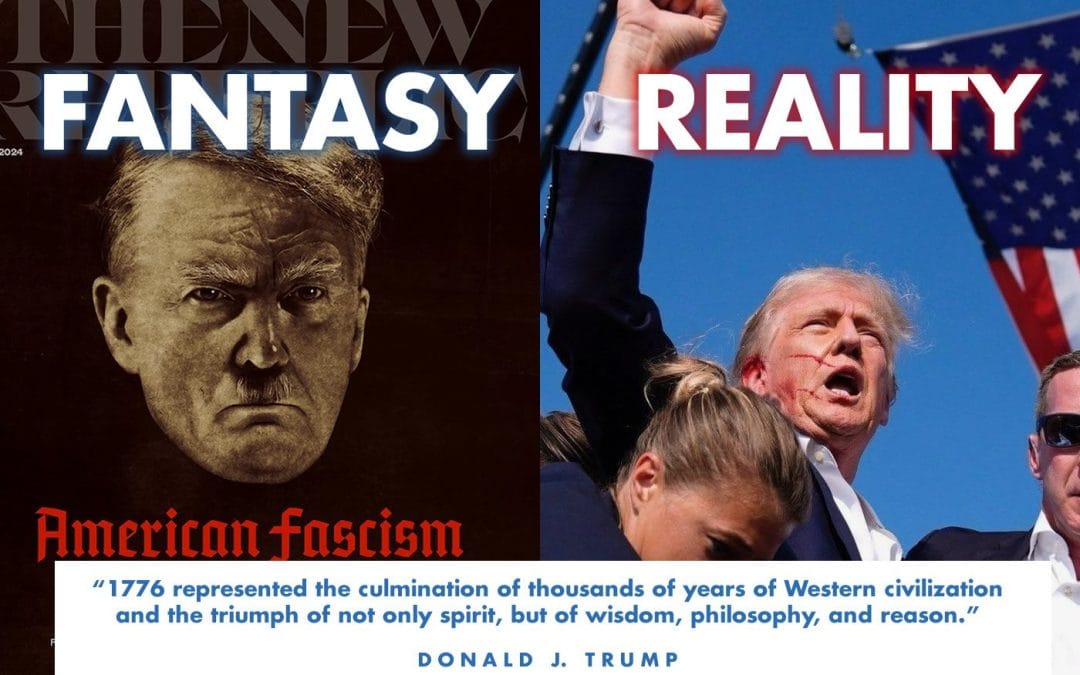
Trump Assasination Attempt Fails

Trump Assasination Attempt Fails

“1776 represented the culmination of thousands of years of Western civilization and the triumph of not only spirit, but of wisdom, philosophy, and reason. And yet, as we meet here tonight, there is a growing danger that threatens every blessing our ancestors fought so hard for, struggled, they bled to secure. Our nation is witnessing a merciless campaign to wipe out our history, defame our heroes, erase our values, and indoctrinate our children. Angry mobs are trying to tear down statues of our founders, deface our most sacred memorials, and unleash a wave of violent crime in our cities. Many of these people have no idea why they’re doing this, but some know what they are doing. They think the American people are weak and soft and submissive, but no, the American people are strong and proud and they will not allow our country and all of its values, history, and culture to be taken from them.”“…In our schools, our newsrooms, even our corporate boardrooms, there is a new far-left fascism that demands absolute allegiance. If you do not speak its language, perform its rituals, recite its mantras, and follow its commandments, then you will be censored, banished, blacklisted, persecuted, and punished. It’s not going to happen to us.”“Make no mistake. This left-wing cultural revolution is designed to overthrow the American Revolution. In so doing they would destroy the very civilization that rescued billions from poverty, disease, violence, and hunger, and that lifted humanity to new heights of achievement, discovery, and progress.”[1]
trump hitler meme
One Should Not Have “Faith” in Any Legal System

One Should Not Have “Faith” in Any Legal System

John Bolton says that “It’s dangerous to question the integrity of our entire legal system. Our enemies in Moscow and Beijing believe that anything that undercuts America’s general faith in the Constitution weakens America. A lost faith in our Judicial Branch is a win for our enemies.It’s actually the opposite. One must constantly question the integrity of all branches of government to make sure they do not overstep their bounds. The American system is not based on faith but reason.Questioning a particular judgment in the legal system, is the only way to maintain the integrity of the entire legal system.Questioning trials is in fact what one cannot do in Moscow and Beijing.And yes even CNN’s legal analyst says the Trump NYC Trial was a political hit job.  https://twitter.com/voicereason05/status/1796312819270607291
CNN Senior Legal Analyst: Trump Conviction Was A Political Hit Job

CNN Senior Legal Analyst: Trump Conviction Was A Political Hit Job

CNN Senior Legal Analyst Elie Honig on How The Trump Conviction Was A Political Hit Job in “Trump Was Convicted — But Prosecutors Contorted the Law“:

The judge [Merchan] donated money — a tiny amount, $35, but in plain violation of a rule prohibiting New York judges from making political donations of any kind — to a pro-Biden, anti-Trump political operation, including funds that the judge earmarked for “resisting the Republican Party and Donald Trump’s radical right-wing legacy.” […]

District Attorney Alvin Bragg ran for office in an overwhelmingly Democratic county by touting his Trump-hunting prowess. He bizarrely (and falsely) boasted on the campaign trail, “It is a fact that I have sued Trump over 100 times.” […]

The charges against Trump are obscure, and nearly entirely unprecedented. In fact, no state prosecutor — in New York, or Wyoming, or anywhere — has ever charged federal election laws as a direct or predicate state crime, against anyone, for anything. None. Ever. […]

Standing alone, falsification charges would have been mere misdemeanors under New York law, which posed two problems for the DA. First, nobody cares about a misdemeanor, and it would be laughable to bring the first-ever charge against a former president for a trifling offense that falls within the same technical criminal classification as shoplifting a Snapple and a bag of Cheetos from a bodega. Second, the statute of limitations on a misdemeanor — two years — likely has long expired on Trump’s conduct, which dates to 2016 and 2017.

So, to inflate the charges up to the lowest-level felony (Class E, on a scale of Class A through E) — and to electroshock them back to life within the longer felony statute of limitations — the DA alleged that the falsification of business records was committed “with intent to commit another crime.” Here, according to prosecutors, the “another crime” is a New York State election-law violation, which in turn incorporates three separate “unlawful means”: federal campaign crimes, tax crimes, and falsification of still more documents. Inexcusably, the DA refused to specify what those unlawful means actually were — and the judge declined to force them to pony up — until right before closing arguments. So much for the constitutional obligation to provide notice to the defendant of the accusations against him in advance of trial. (This, folks, is what indictments are for.)

In these key respects, the charges against Trump aren’t just unusual. They’re bespoke, seemingly crafted individually for the former president and nobody else.

The Manhattan DA’s employees reportedly have called this the “Zombie Case” because of various legal infirmities, including its bizarre charging mechanism. But it’s better characterized as the Frankenstein Case, cobbled together with ill-fitting parts into an ugly, awkward, but more-or-less functioning contraption that just might ultimately turn on its creator.

CNN: Would Trump Be a Dictator if Relected?

CNN: Would Trump Be a Dictator if Relected?

William Cooper writes an opinion piece published at CNN asking if Trump would be a dictator if relected. Some nuggets:

“…A dictator dictates the workings of government. Merriam Webster defines a dictator as “one holding complete autocratic control: a person with unlimited governmental power.” This is what Trump will want to achieve. But he won’t get anywhere near “complete autocratic control” over American government.

[…]

The presidential pardon power isn’t broad enough to preemptively immunize widespread criminal activity; political appointees must be confirmed by a majority of the Senate (which would reject Trump’s worst co-conspirators); and the majority of federal officials serve across presidential administrations in a large, powerful and entrenched bureaucracy.

The federal bureaucracy can’t simply be “purged.” Valid federal legislation authorizes and funds government agencies — and powerful unions protect their workers — so the courts won’t allow federal employees to be fired en masse absent duly enacted legislation. Republican presidents have long tried to shrink the administrative state. They’ve failed miserably.

The Department of Justice moreover, didn’t go after Trump’s enemies the last time he was president. To the contrary, the department rejected Trump’s demands to prosecute former President Barack Obama, then-former Vice President Joe Biden, former Secretary of State Hillary Clinton, former FBI Director James Comey, former Deputy FBI Director Andrew McCabe, and others.

The Justice Department did, however, prosecute many of Trump’s friends. Roger Stone was convicted of lying to Congress and threatening a witness. Michael Flynn pleaded guilty to lying to the FBI in 2017 and asked to withdraw his guilty plea in 2020. Steve Bannon was charged with defrauding investors in his campaign to build a wall at the southern border. Paul Manafort was convicted of tax fraud. And Tom Barrack was acquitted at trial of foreign lobbying charges. Trump eventually pardoned FlynnBannonStone and Manafort. But the Department of Justice’s lawyers had zealously prosecuted these men.

To imprison his enemies, Trump would need grand juries to indict on his command, courts to rule in his favor and juries to render his chosen verdicts.

The president of the United States doesn’t have power over these things. Grand juries operate under the supervision of the federal courts, not the executive branch. Federal judges sit for life subject to impeachment from Congress. And the only authorities with the power to affect a jury verdict are the trial judge and the appellate courts.

Trump-appointed judges, all confirmed by a majority of the Senate, have shifted the federal courts sharply to the right. But they have also shown their independence and ruled against Trump repeatedly. The Supreme Court allowed a New York prosecutor to receive Trump’s tax returns, denied Trump’s effort to end DACA and rejected Trump’s bid to overturn the 2020 presidential election.

The Senate, furthermore, still has to confirm, by majority vote, all executive-level presidential appointments (including at the Department of Justice). Trump can’t just appoint, for example, Rudy Guliani as attorney general, Steve Bannon as secretary of defense or Michael Flynn as secretary of state. And pardons only apply to federal offenses, offer no protection under state law and may be voided in court if they are preemptive and not specific. They are hardly a license to go about committing major crimes. Just look at Bannon, who was pardoned by Trump in his border wall case and later convicted for refusing to cooperate with the January 6 committee in Congress.

Unlike a dictator, Trump wouldn’t control most government activity — at the federal, state or local level. If the Democrats take the House in 2024, would Trump control how they vote on legislation? Would he force state court judges to govern how he wants them to? Local school boards?

No way. To be a dictatorship, people have to actually do the things the dictator says. Given his historic unpopularity ratings, the resistance to a second Trump term will likely be fierce at every level of government.

The one way Trump could actually achieve a dictatorship is if he commandeered the military to use force — or its threat — throughout the country on his behalf. But there’s no reason whatsoever to think he could pull that off. Trump has long had strained relations with military leaders, including his secretaries of defense John Mattis and Mark Esper and Chairman of the Joint Chiefs of Staff Mark Milley.

As we saw with Milley — who actively opposed Trump’s attempt to reverse the 2020 presidential election results — military leaders won’t just obey Trump’s illegal initiatives. The military doesn’t “take an oath to a wannabe dictator,” Milley said in his departing speech last September. “We take an oath to the Constitution and we take an oath to the idea that is America — and we’re willing to die to protect it.”

[…]

Trump would have an ironclad grip on some things, such as international diplomacy and statehouses dominated by his loyalists. He would have some control in other areas, such as executive branch policies and initiatives. And he’d have little to no control over everything else, such as the daily workings of the state courts and Democrat-run state governments.

Full article: Opinion: Would Trump be a dictator in a second term? No, but he would be a disaster

Voice of Capitalism

Capitalism news delivered every Monday to your email inbox.

You have Successfully Subscribed!

Pin It on Pinterest