Jan 15, 2016 | Business, Politics, Sci-Tech
Technology has created more jobs than it has destroyed, says 140 years of data | Business | The Guardian
Study of census results in England and Wales since 1871 finds rise of machines has been a job creator rather than making working humans obsolete. In the 1800s it was the Luddites smashing weaving machines. These days retail staff worry about automatic checkouts. Sooner or later taxi drivers will be fretting over self-driving cars.The battle between man and machines goes back centuries. Are they taking our jobs? Or are they merely easing our workload? A study by economists at the consultancy Deloitte seeks to shed new light on the relationship between jobs and the rise of technology by trawling through census data for England and Wales going back to 1871.Their conclusion is unremittingly cheerful: rather than destroying jobs, technology has been a “great job-creating machine”. Findings by Deloitte such as a fourfold rise in bar staff since the 1950s or a surge in the number of hairdressers this century suggest to the authors that technology has increased spending power, therefore creating new demand and new jobs.Their study, shortlisted for the Society of Business Economists’ Rybczynski prize, argues that the debate has been skewed towards the job-destroying effects of technological change, which are more easily observed than than its creative aspects. Going back over past jobs figures paints a more balanced picture, say authors Ian Stewart, Debapratim De and Alex Cole. “The dominant trend is of contracting employment in agriculture and manufacturing being more than offset by rapid growth in the caring, creative, technology and business services sectors,” they write.“Machines will take on more repetitive and laborious tasks, but seem no closer to eliminating the need for human labour than at any time in the last 150 years.”
Jan 14, 2016 | Business, Politics
It is a generally accepted truth these days that good corporate culture is good business. Almost without exception, great companies point to their organizational values as a key reason for their success. But why? In what way do strong guiding values enable a business to achieve its goals?Ray Girn, CEO of LePort Schools, shares a few stories about how his company’s core values have impacted the growth of his business, and through them explore key reasons for the immense practical power of moral values in business.Recorded at the STRIVE Clubs 2015 Fall Student Conference on "The Morality of Value Creation & Trade."

Dec 3, 2015 | Business, Politics, Sci-Tech
A half century ago the famous philosopher Ayn Rand identified the principle that motivates the haters of success. In her essay “The Age of Envy" she called it the "Hatred of the good for being the good":Today, we live in the Age of Envy.
“Envy” is not the emotion I have in mind, but it is the clearest manifestation of an emotion that has remained nameless; it is the only element of a complex emotional sum that men have permitted themselves to identify.
Envy is regarded by most people as a petty, superficial emotion and, therefore, it serves as a semihuman cover for so inhuman an emotion that those who feel it seldom dare admit it even to themselves. ...That emotion is: hatred of the good for being the good.
This hatred is not resentment against some prescribed view of the good with which one does not agree.... Hatred of the good for being the good means hatred of that which one regards as good by one’s own (conscious or subconscious) judgment. It means hatred of a person for possessing a value or virtue one regards as desirable.
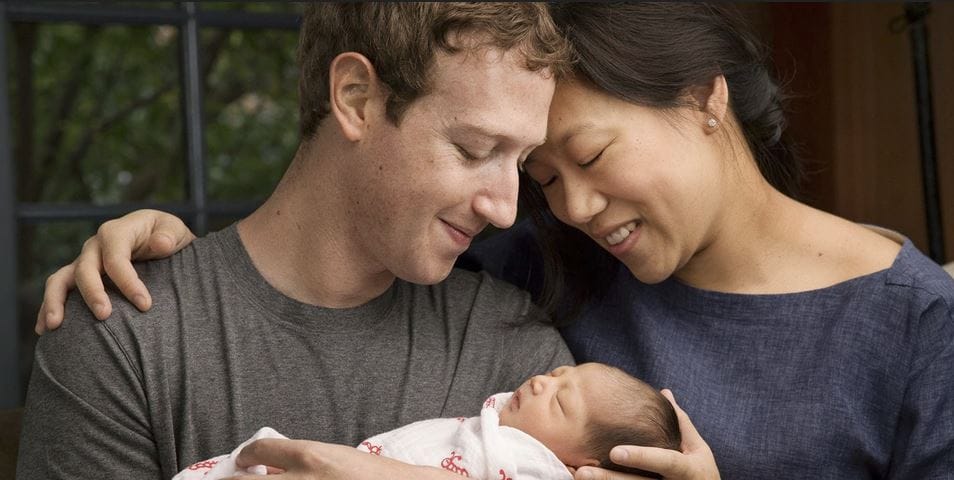
As a concrete illustration of this principle, ponder the envy-filled "progressive" "social justice" warrior Devon Maloney's response to Zuckerberg's donation of 45 billion dollars to charity:Studies have shown that billionaire altruists like Zuckerberg are increasingly directing the course of American science, for example, and can supercharge research that has otherwise been bogged down in public sector and governmental bureaucracy – thus saving thousands if not millions of lives. But it also means that the rich are still effectively buying the future they’d like to see, no matter how selfless their intentions may be.
Apparently they should build a future that Maloney wants to see.International philanthropy and the western world’s desire to eradicate poverty and disease can’t ever truly rid themselves of their imperialist roots; as many critics have pointed out, the white savior industrial complex has never been more pervasive in global culture. When you have an extra $45bn lying around, nothing you do with that money will come without strings, whether you craft those strings or not. Simply by creating and overseeing the world’s largest social network and one of the most influential corporations on Earth .... Mark Zuckerberg himself continues to reproduce the inequality he and his wife are taking aim at with their pledge. [...] if it took Max Chan Zuckerberg’s birth to give her parents the courage and determination to destroy their own ivory tower for the needs of the many, we should all be praying that she’ll get a few more siblings in the coming years.
One wonders what kind of Ivory Tower of envy and hatred Maloney lives in.Zuckerberg and other entrepreneurial businessmen have the ability to create values (like Facebook) and make money at the same time -- Maloney has little or none. Ergo the "white industrial complex/ivory tower" (capitalism) is wrong and must be destroyed.Quoting from Galt's Speech in Atlas Shrugged:They do not want to own your fortune, they want you to lose it; they do not want to succeed, they want you to fail; they do not want to live, they want you to die; they desire nothing, they hate existence, and they keep running, each trying not to learn that the object of his hatred is himself . . . . They are the essence of evil, they, those anti-living objects who seek, by devouring the world, to fill the selfless zero of their soul. It is not your wealth that they’re after. Theirs is a conspiracy against the mind, which means: against life and man.
Dec 3, 2015 | Business, Politics
Two views on the Zuckerberg donation.Complains Jesse Eisinger on How Mark Zuckerberg’s Altruism Helps Himself at the NY Times, "superwealthy plutocrat" Zuckerberg's charity LLC will allow him to donate money to charity and avoid paying taxes on the money donated to charity.Society, through its elected members, taxes its members. Then the elected officials decide what to do with sums of money. In this case, it is different. One person will be making these decisions.
... I think I might do a good job allocating $45 billion. Maybe even better than Mr. Zuckerberg. I am self-aware enough to I realize many people would disagree with my choices.
... Mega-donations, assuming Mr. Zuckerberg makes good on his pledge, are explicit acknowledgments that the money should be plowed back into society. They are tacit acknowledgments that no one could ever possibly spend $45 billion on himself or his family, and that the money isn’t really “his,” in a fundamental sense. Because [if] that is the case, society can’t rely on the beneficence and enlightenment of the superwealthy to realize this individually. We need to take a portion uniformly — some kind of tax on wealth.
Compare this to the eloquent Ross Kaminsky on Not Giving Back, Just Giving | The American Spectator:Still, when the uber-wealthy promise to give away their fortunes, there’s a part of me that can’t help but anticipate with some annoyance the inevitable fawning reactions of the commentariat that the particular billionaire is “giving back” — as if he or she had taken something, as if depleting a fortune is more newsworthy or praiseworthy than earning it (even though earning it seems more difficult and a precondition for giving it away).
... the Chan-Zuckerberg letter betrays an unfortunately collectivist mentality, discussing their “moral responsibility” and urging people to “collectively direct our resources,” as if resources are “ours” instead of “theirs” or “yours” or “mine.” Unless a person inherited or stole his riches — and I don’t believe that anyone mentioned above falls into that category — both in moral and economic terms the wealthy have by definition already given back.
....After years of hearing the twisted jealousy of the left, too many Americans believe that billionaires are “takers” and therefore have a duty to “give back.” That turns reality — and morality — on its head. These people have been wildly successful because they have made the lives of millions of human beings wildly more productive, secure, healthy and even fun.
.... Their affluence is a measure of their contributions to society, not their impoverishing of it. As laudable as it is that Mark Zuckerberg and other participants in the Giving Pledge direct their wealth toward charitable enterprises that reflect their goals and values, what should truly be celebrated is that they were able to earn those fortunes to begin with. No matter how well the billionaires target their altruistic impulses, they have improved our lives more by making their fortunes than by disposing of them.
Dec 2, 2015 | Business, Politics
Alex Epstein explains The Truth About Mark Zuckerberg's Letter To His Daughter - Forbes:
...Every problem that Zuckerberg says he cares about has been solved by political-economic freedom: the liberation of individuals from coercion by one another and by government. If that freedom existed in the impoverished world then the impoverished world would quickly become prosperous. What will not make the impoverished world prosperous–or free–is for billionaires to dole out huge sums of conspicuous charity to unfree people while doing absolutely nothing to fight for their freedom.[...]And yet when billionaires like Mark Zuckerberg and Bill Gates talk about improving energy access or environmental quality around the world, they steer clear of challenging the anti-freedom governments and anti-freedom ideas that cause these problems. Quite often, they embrace anti-freedom ideas–such as the movement to force us to use the most expensive, unreliable sources of energy such as solar and wind. All of this is based on a fundamental pretense–that what moves life forward is people like them doling out wealth–instead of people like all of us living in free societies where we can create our own wealth.This pretense is psychologically convenient. It makes the billionaire feel good about himself and often enables him to win back some of the approval he lost by making so much money. Importantly, a billionaire doling out a lot of money requires no independent thought or courage whatsoever–whereas fighting for freedom requires a lot of it, because fighting for freedom is always connected to controversial issues.[...]And thus what we have is a world in which the world’s most brilliant business minds, minds that have reached their potential only because of freedom, do absolutely nothing to promote freedom. When was the last time that you saw a prominent billionaire businessman take a courageous stand for freedom, a stand that would invite disapproval but was nevertheless the right thing to do?
Well said.
Nov 8, 2015 | Business, Politics
by Dr. Michael HurdWhat psychological purpose, if any, does belief in the supernatural serve?Clay Routledge Ph.D., researcher on the subject and author of “More Than Mortal” thinks it’s about meaning in life:My research lab studies how religious beliefs contribute to perceptions of meaning in life. Not surprisingly, we and other researchers reliably find that religious beliefs help people find and maintain meaning. In general, the more religious people are, the more they believe their lives are meaningful. Religious beliefs make people feel like their existence is purposeful (i.e., God has a plan for them), that they are being watched over by benevolent supernatural agents (God, guardian angels), and that they are part of a larger and meaningful cosmic drama (i.e., God intentionally created the world). Not surprisingly then, when people are struggling with difficult life challenges that make them feel uncertain, stressed, or scared, religious beliefs serve an important psychological function. They restore and protect a sense of meaning in life.
Actually, I have noticed two different types of religious people. One, those who believe what they believe and are largely at peace with it. When reason/common sense and religion conflict, the religious person tells him- or herself, in essence, “Have faith,” or finds some idea or principle in religious documents (e.g., the Bible) to support the basis for faith.The other types are in a continuing state of psychological crisis, either because they’re questioning or they’re using logic and reason to try and make sense of their religious beliefs. On the one hand, they believe, or at least feel they should. On the other hand, they’re questioning and thinking, and that tends to get in the way of the belief.Consider a conversation like this one:“I’m angry that my life has turned out this way. I’m angry and hurt that my mother was so unloving. I’m angry that I didn’t get the jobs I should have got, or found the romantic love I wanted.”
“Who are you angry at?”
“I’m angry at God. Why would God allow this kind of suffering? I realize there’s greater suffering than what I endured. But if God is so wise and just, why all the problems?”
“But aren’t you applying reason, logic and standards of human justice to something that’s faith based? Doesn’t your religion tell you to simply believe and accept, uncritically?”
The question answers itself because faith, by definition, does not involve reason, logic, proof or sense. It’s something different, as I think either a faith-based or non-faith-based person will tell you.In such cases, the psychological conflict arises because of a contradiction, the basis for many psychological conflicts and problems.Says Routledge:It makes sense that religious beliefs that involve loving and protective supernatural agents such as God and guardian angels would help people feel like their lives are meaningful and purposeful.
Most people assume that the only way to find meaning and purpose in life is through some kind of a religious perspective.Yet what about meaning and purpose to be found in other ways? Through the development of one’s mind; through some kind of purposeful or meaningful work involving the use of reason and leading to concrete results like the building of a house, the building of a business, the discovery of a computer microchip, electricity or a cure for cancer? Through the pursuit and achievement of values in the context of a verifiable, time-limited period of existence on earth?Two things are apparent. The religious person who also resolves to live a meaningful, secular life to the fullest can experience a sense of happiness. But so can the person who is not religious, who resolves to live a meaningful, secular life to the fullest pursuing productive results and/or rationally happy experiences. In fact, one might argue that the nonreligious person could be even happier because — on the premise that this is all there is — one should make the most of it.In one study, we administered questionnaires assessing religiosity and perceptions of meaning in life. We then presented research participants with a task that involved reading a profile of a young man who murdered his sister and responding to questions concerning the causes of his actions. These questions specifically assessed the extent to which participants attributed his actions to non-supernatural causes (e.g., having an abusive father) or supernatural causes involving evil forces (e.g., having an evil spirit).
Here is what we found. Highly religious participants who reported feeling like their lives lacked meaning were the most likely to believe that evil supernatural forces influenced the murderer’s actions. In other words, it was the people who needed meaning (those lacking it) and who derive meaning from supernatural beliefs (highly religious people) who were most attracted to a supernatural explanation of a horrible crime. These individuals were more likely to believe that the murderer had a dark soul. They were less likely to attribute his actions to non-supernatural causes such as growing up in an abusive household.
What is a “spirit” anyway? Most of us have left it to believers in the supernatural to define this term. Either you believe in spirits, which makes you supernatural or religious in some sense; or you don’t believe in spirits, which makes you a hard-nosed, stone cold material behaviorist.But if you define a spirit objectively and concretely, you can avoid this false alternative. I define a “spirit” as a consciousness. A consciousness refers to one’s mind, concepts, emotions and all that pertain to a state of conscious awareness. These, in unison with the body and the biological composition of a person, make the individual who he or she is. If the body dies, the spirit is gone too, and the body quickly decays.Body and mind/consciousness. There is not one without the other. If you believe there is, then you believe that the spirit goes somewhere “else” after the body dies, and that’s the point where religious belief takes over. But you do not have to be a religious believer to observe that there is something called a consciousness, something you might (if you choose) refer to as one’s spirit.As for the study cited above, notice how both types — the religious believer and nonreligious believer — tend to assume something else made the criminal a criminal. If you’re religious, you might think that supernatural forces contributed to the person becoming a serial killer. If you’re not religious, then you will assume it’s the abusive father, “society,” lack of government funding, the legality of guns or something other than the criminal himself.This is significant, because nobody on the religious or nonreligious side of the spectrum appears to recognize the power and relevance of individual choice. More than that, what actually creates individual choice?When I assert the validity and importance of individual choice, I generally find that religious people — who are usually more conservative — agree with me, while more educated people will look to external factors such as biology, society, parents, and so forth.Yet a person can have a “bad spirit” or a “sick spirit” with “spirit” being rationally and objectively defined. It’s up to the field of psychology (which studies the mind, particularly the subconscious mind) and the fields of neurology and biology/medicine (which study the body) to sort it all out. And this requires reason, not religion, as probably some religious people will acknowledge.Does life require meaning and purpose? Yes. Can reason and purpose involve rational, objective, concretely identifiable things such as career, family, productive work, personal relationships, satisfying and joyful experiences — all in this life, here and now, on earth? No question.People who disagree with me (on any subject) will often write me with hostile, deliberately rhetorical questions designed to be intimidating or insulting. I find these amusing, but also rather fascinating.One question I get from a lot of religious people who dislike what they see as my criticism of religion is, “Well what do you believe in, Dr. Hurd? If not God, then what?”I find such a question astonishing. On the one hand, I recognize that it’s supposed to intimidate a questioner or thinker into bowing his head and saying, in shame, “Nothing.” It’s a “shaming” question from one who has no rational response to a point so defaults to his only weapon, i.e. shame.Yet my immediate, emotionally integrated and absolute answer to this question is nothing more than, “Life…and my love of it.” What else is there to believe in, act upon, think about or anything else? By what stretch could this ever be shameful?Such subjects might seem a little abstract and profound. But realize it or not, you probably hold a position of some kind on these issues. And where your mind stands — even subconsciously — will determine, to a great extent, how happy you really are.