The Right to Abortion and the Ninth Amendment of the U.S. Constitution

Writes Ira Stoll in Abortion Right Not in Constitution, Doesn't Mean It Doesn't Exist:
"The Supreme Court’s opinion in Roe v. Wade,410 U.S. 113 (1973) discovered a right to abortion in the Constitution within the "right to privacy." That privacy right itself had been discovered in a case about birth control, Griswold v. Connecticut, 381 U.S. 479 (1965). Griswold’s declaration that the "specific guarantees in the Bill of Rights have penumbras, formed by emanations," has been widely mocked.To my mind, the gem within Griswold is Justice Arthur Goldberg’s concurrence. Goldberg, joined by Justice Brennan and Chief Justice Warren, focused not on penumbras or emanations but on the plain text of the Ninth Amendment."
Stoll goes on to quote Justice Arthur Goldberg:
"The [Ninth] Amendment is almost entirely the work of James Madison. It was introduced in Congress by him, and passed the House and Senate with little or no debate and virtually no change in language. It was proffered to quiet expressed fears that a bill of specifically enumerated rights could not be sufficiently broad to cover all essential rights, and that the specific mention of certain rights would be interpreted as a denial that others were protected....the Ninth Amendment shows a belief of the Constitution's authors that fundamental rights exist that are not expressly enumerated in the first eight amendments, and an intent that the list of rights included there not be deemed exhaustive. ...the fact that no particular provision of the Constitution explicitly forbids the State from disrupting the traditional relation of the family — a relation as old and as fundamental as our entire civilization — surely does not show that the Government was meant to have the power to do so. Rather, as the Ninth Amendment expressly recognizes, there are fundamental personal rights such as this one [abortion], which are protected from abridgment by the Government, though not specifically mentioned in the Constitution."
Stoll concludes correctly:
The mere fact that an abortion right isn’t mentioned in the Constitution doesn’t mean it doesn’t exist. The rights don’t come from the Constitution. The Constitution exists to protect the rights, including those it doesn’t explicitly mention.
Then why explicitly mention and enumerate rights?
"A problem with rights not written into law is that people may have widely varying views of them. Without legislative language, for example, one person’s idea of a right to an abortion may collide with another person’s view of a fetus or embryo having a 'right to life.'
Read the whole article.
Jordan McGillis: Climate McCarthyism

Jordan McGillis: Climate McCarthyism

Jordan McGillis, deputy director for policy at the Institute for Energy Research, on Climate McCarthyism:
In 2020, Senators Elizabeth Warren, Brian Schatz, Tom Carper, and Sheldon Whitehouse penned an open letter to Meta CEO Mark Zuckerberg calling on the company to toe the Democratic Party line. “If Facebook is truly ‘committed to fighting the spread of false news on Facebook and Instagram,’” the senators wrote, “the company must immediately acknowledge in its fact-checking process that the climate crisis is not a matter of opinion and act to close loopholes that allow climate disinformation to spread on its platform.”Less than a year later, Zuckerberg’s company seemingly tightened its review process to adhere to the Democrats’ wishes. In May 2021, Facebook applied the dodgy new standard against Manhattan Institute senior fellow Mark Mills’s review of a book by Steven Koonin, former undersecretary in the Department of Energy under President Barack Obama. As Koonin described the incident in the pages of the Wall Street Journal, Facebook labeled postings of the Mills review as having “very low scientific credibility” and linked to a critique on the website ClimateFeedback.org, thus discouraging users from engaging with Mills and Koonin’s work—exactly as the Senate Democrats demanded. In these cases, it is easy to blame the companies that acquiesce—perhaps one large rival to Meta in the midst of an ownership change will buck this trend—but the politicians and bureaucrats doing the jawboning deserve ire, too.
Read the full article.
Brian Simpson: Is US Constitution in Danger?

Brian Simpson: Is US Constitution in Danger?

James Valliant interviews economist Brian Simpson on the threats to America's constitution: from calls to end the filibuster, pack the court, release decisions, and how the constitution protects your economic liberties.https://www.youtube.com/watch?v=AiwinKqiev0
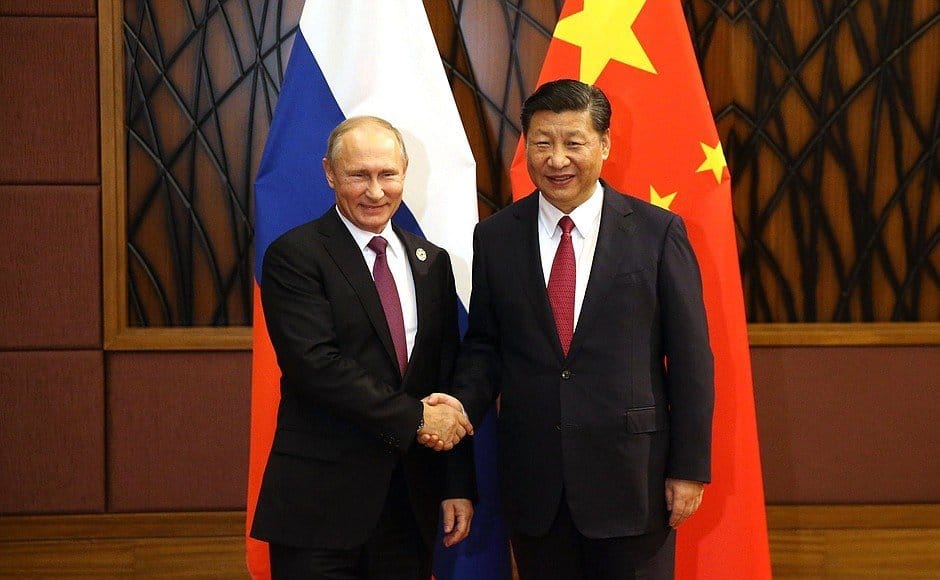
The Banality of Putin and Xi

The Banality of Putin and Xi

Yaron Brook and Elan Journo have written an insightful analysis on why tyrants like China's Xi and Russia's Putin appear "charismatic" & "successful": the intellectual's hatred of freedom and western appeasement.
They make four important points:

Freedom fuels human progress and prosperity.

For individuals to live, think, produce, and thrive, the role of a proper government is to protect their freedom. It is freedom that fuels human progress and prosperity. No one who values human flourishing can look at Putin, Xi or any other dictator as anything but a lethal aberration....They dominate, brutalize and exploit those who think, teach, invent, produce, run businesses, create value at whatever scale. By violating the rights of their citizens, Putin, Xi and other dictatorial leaders defy the objective conditions necessary for individuals to live and prosper. They are destroyers. "To deal with men by force," observed philosopher Ayn Rand, "is as impractical as to deal with nature by persuasion."

Putin & Xi's regimes are geared toward parasitism and exploitation.

Putin-aligned oligarchs have ransacked the country. China's caste of party-aligned operatives have raked in billions, amid the country’s impressive economic rise. That rise, now seemingly slowing, occurred despite not because of China’s dictatorial leadership. It was a consequence of the slight degree of economic freedom the Party condescended to permit -- and which it is now undoing....Such dictators and their hangers-on are thugs, gangsters and murderers who operate under the state's (ostensible) moral authority. Human parasitism is an expression of not of efficacy, but of impotence.

Western intellectuals & policymakers have a prejudice against freedom, especially markets.

You can see it in the bias against markets, deemed messily inefficient, and in favor of central planning....many in the West are afflicted by what you might call Central-Planner Envy, and this leads them into warped thinking. It picks out supposed accomplishments  -- "Behold the highspeed trains in Xi's China!" -- while evading the full reality of the uncountable individuals whose rights are trashed in the course of maintaining the regimes system’s pervasive repression.

Western appeasement, investment, and whitewashing embolden Russia and China.

...Russia and China are afforded the undeserved moral status of civilized countries. By agreeing to sit down with them at summits and multilateral meetings, our heads of state perpetuate the fiction that Putin and Xi as efficacious and benevolent leaders that belong in the company of rights-respecting nations.The United Nations is a major culprit in whitewashing these regimes. Both have permanent seats on the UN's powerful Security Council(!), despite violating the organization’s stated principles -- flagrantly, repeatedly, and on a vast scale. What about the massacring of pro-democracy student protesters at Tiananmen Square in 1989? Dousing the last embers of intellectual freedom? Interning thousands of Uighurs in concentration camps? Wiping out the last vestiges of freedom in Hong Kong? Ongoing piracy of foreign-owned intellectual property? The dishonest handling of the COVID pandemic? No, China has learned that it is effectively untouchable.This official whitewashing encourages, and is reinforced by, the willingness of American and European companies to invest in China and Russia as if they were basically free, civilized, moral regimes....Putin’s regime, for example, has benefited handsomely from the inflow of foreign capital and joint-ventures with BP, Shell and Exxon. But, since the war in Ukraine, all three of these companies are frantically departing the Russian market, suffering losses in the tens of billions of dollars.When you reflect on how the U.S. and European nations dealt with Putin’s past aggression, his initiation of war against Ukraine on February 24, 2022, is exposed as foreseeable, rather than strategically shrewd let alone “genius.” Passive appeasement by the U.S. and Europe emboldened Putin...
Required reading. 
The Problem with the Umbrella approach to Libertarianism

The Problem with the Umbrella approach to Libertarianism

Professor Phil Magness has a tweet thread on why Libertarians eventually turn away from freedom, to alt-right or marxism: He remarks that this "originates from attempts to synthesize exogenous illiberal ideas into libertarian thought." He identifies this as libertarian thinkers "dabbling in illiberal thought." One example he uses is the case of Austrian, anarchist, "critical thinker" Hans Herman Hoppe:
"Hoppe's "argumentation ethics," in turn, is explicitly lifted from the Discourse Ethics tradition in critical theory. Hoppe even directly sources the origin of his "argumentation ethics" claim to his old grad school advisors Habermas and Karl-Otto Apel."..."Again, having trained directly under Habermas, Hoppe was deeply versed in critical theory, approved of it, and used it in his work. He simply gave its traditionally far-left political disposition a far-right makeover.""Hoppe also imports an eclectic mix of reactionary racial theorists that originated wholly externally to the Austrian-liberal economic tradition. You see this in his book Democracy the God That Failed, where he describes Mises's open immigration views as a relic of a bygone age.""After rejecting Mises on immigration, Hoppe replaces them with appeals to far-right racial theorists such as J. Phillipe Rushton and the novelist Jean Raspail (of "Camp of the Saints" infamy). These figures populate the footnotes of his book whenever he talks about immigration.""Like Yarvin's use of Carlyle, Hoppe's main influences are EXTERNAL to classical liberalism/libertarianism, and indeed quite a few of them are traditional ADVERSARIES of libertarian economic philosophy - Marx, Habermas & the critical theory world.""Why do figures such as Yarvin, Hoppe, and their various followers veer down this illiberal path? In each case, it stems from them finding something dissatisfying with the traditional classical liberal status quo. So they search for external authors in other traditions."
The problem with the "umbrella approach of libertarianism" is that the objective value and meaning of liberty—freedom from the initiation of physical force—is not a self-evident axiom, but a sophisticated conclusion from a long chain of observations and premises—a specific philosophy. To the extent that the underlying philosophy is pro-reality (this-worldly, natural), pro-reason (logic and evidence of senses), or pro-egoism (individualism), it will have a proper conception of liberty; as it strays its conception of liberty will be corrupted. This is what happened to the "classical liberal" tradition. It's no coincidence that the rise of freedom, and the birth of America, historically occurred along with the Renaissance thru Enlightenment, with the cherishing of reason (vs faith), science (vs superstition), and individual rights (vs collectivism) to various degrees.This view is best expressed by philosopher Ayn Rand:
"I am not primarily an advocate of capitalism, but of egoism; and I am not primarily an advocate of egoism, but of reason. If one recognizes the supremacy of reason and applies it consistently, all the rest follows."
If one wishes to be an advocate of liberty, one must first be an advocate of reason, then and only then, does "all the rest follow."
Why Communism Fails in Practice

Why Communism Fails in Practice

Economically, communism fails in practice because a society with no government (agency to protect rights), no money (no indirect trade, only barter), and no wage labor (no specialization under a division of labor) is a terrible idea. Then why do people continue to support it?
"When, at the age of twelve, at the time of the Russian revolution, I first heard the Communist principle that Man must exist for the sake of the State, I perceived that this was the essential issue, that this principle was evil, and that it could lead to nothing but evil, regardless of any methods, details, decrees, policies, promises and pious platitudes. This was the reason for my opposition to Communism then—and it is my reason now. I am still a little astonished, at times, that too many adult Americans do not understand the nature of the fight against Communism as clearly as I understood it at the age of twelve: they continue to believe that only Communist methods are evil, while Communist ideals are noble. All the victories of Communism since the year 1917 are due to that particular belief among the men who are still free." - Ayn Rand, quoted in the forward to her novel, We The Living.
https://www.youtube.com/watch?v=HQMDJPaGhzI

Voice of Capitalism

Capitalism news delivered every Monday to your email inbox.

Subscribed. Check your email box for confirmation.

Pin It on Pinterest